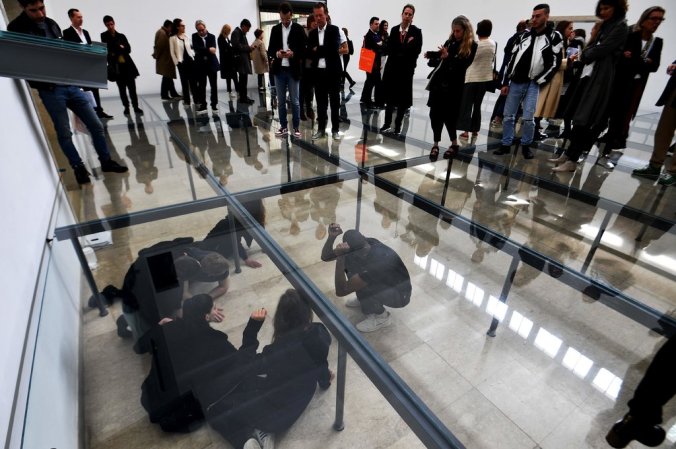
Giravano, tra le folle dei Giardini alla 57sima Biennale di Venezia, due dobermann, curiosi, saltellanti e annusanti, sempre al guinzaglio. Poi sono spariti. Ritirati. Per le proteste delle associazioni di ambientalisti. Facevano parte della performance virata al sadomaso al padiglione tedesco, che ha fatto vincere all’artista tedesca Anne Imhof il Leone d’oro. Senza i cani avrebbe vinto ugualmente? L’arte che racconta l’intimidazione e la minaccia dei nostri tempi s’incrocia con le intimidazioni e gli altolà etici della società globalmente permalosa.
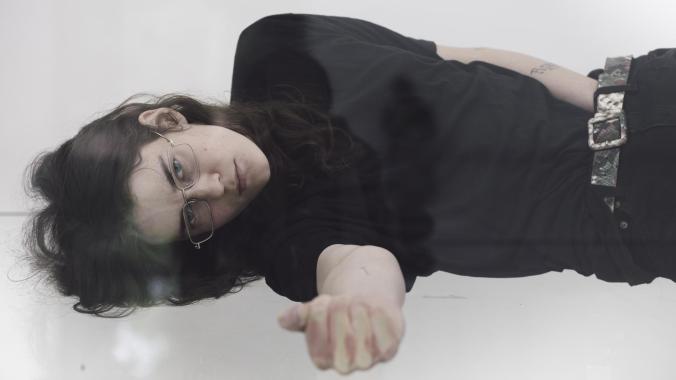
Anne Imhof
I brividi scendono e la noia sale. Facile sentirsi stranieri a Venezia, anche dopo dieci biennali e innumerevoli visite, mostre, feste, passeggiate, carnevali, sperdimenti. A Venezia, si socializza chiedendo indicazioni, google map funziona male. Si confonde tra rami, calli, campi, campielli, rughe. Ti trovi di fronte a un canale senza ponte, o a un ponte che porta a un palazzo privato. Magari con il portone aperto. E scivoli dall’androne a un’altra calle. Può essere divertente sentirsi sempre stranieri a Venezia. Del resto, un veneziano del sestiere di Castello può avere problemi con le direzioni nel vecchio ghetto della città lagunare e uno domiciliato alle Zattere potrebbe perdere la bussola nei rami di Cannareggio. Gli abitanti dei diversi sestieri andavano sicuri solo per prendersi a botte a metà strada, spesso sui ponti (vedi il ponte dei pugni). Il sottofondo babelico di lingue diverse aiuta la confusione e lo spaesamento. Non mi pare che nessun artista qui abbia mai pensato a realizzare un’opera sulla confusione. Potrebbe aver successo. Venezia è un hub cultural-commerciale dal medioevo e il nostro presente è un’età confusa.

L’isola di San Giorgio/ San Giorgio island
Invece la Biennale della curatrice Christine Macel è chiara, didattica, perbene e noiosa. Asfaltata di noia. All’Arsenale, fili e ricami pendono ovunque, bozzoli, reti, con appesi richiami sociali triti. Lacerti di libri, guardaroba in monocromo. Il padiglione centrale dei Giardini ha i soliti laboratori in corso, le opere meno convincenti di Kiki Smith, le battute d’artista ripescate dai decenni passati. Vorrebbe essere giocosa. Ma è solo volenterosa. Una Biennale Montessori. Lo spirito si solleva prendendo un vaporetto per l’isola di San Giorgio, dove ci sono le splendide antologiche di Michelangelo Pistoletto e Alighiero Boetti.
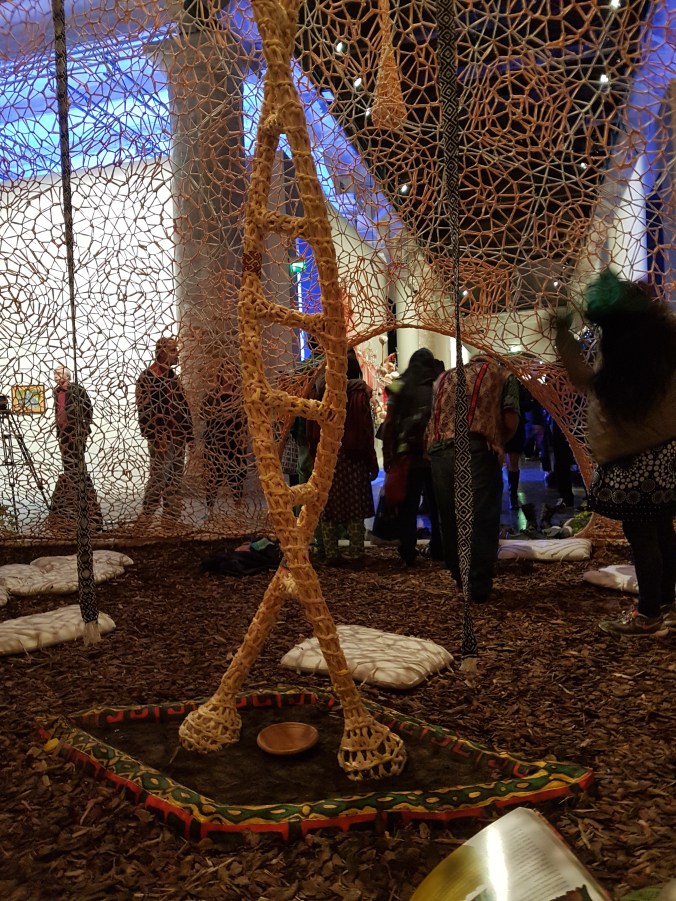
Installazione effetto giungla di Ernesto Neto all’Arsenale/Jungle installation by Ernesto Neto at Arsenale
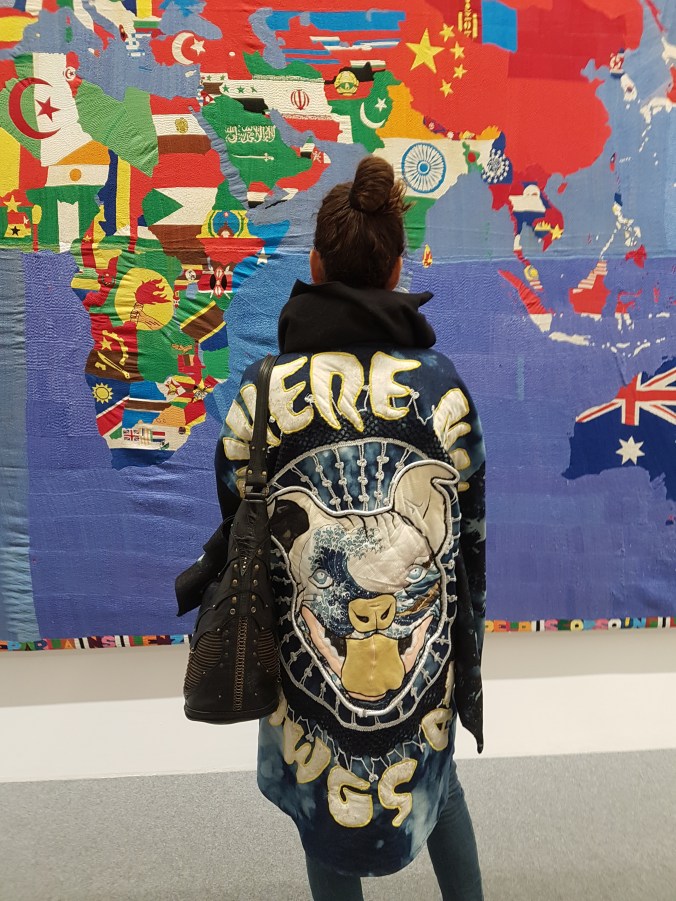
Patchwork e arte, una visitatrice davanti una mappa di Alighiero Boetti/Patchworks matching embroideries, a viewer watching a Boetti’s map
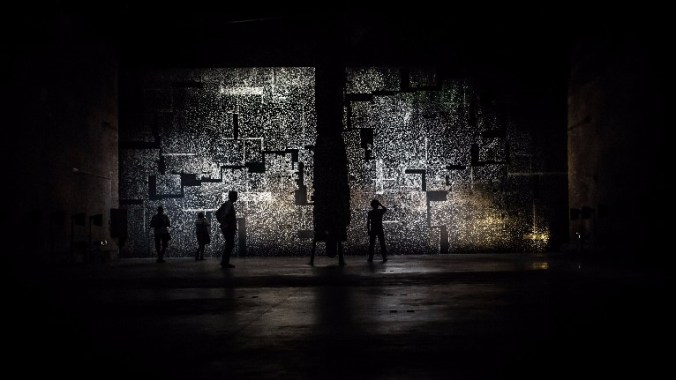
L’installazione Sole Nero d Zad Moultaka al padiglione Libanese/ Zad Moultaka, Samas Sun Dark Sun, at Lebanese Pavillion
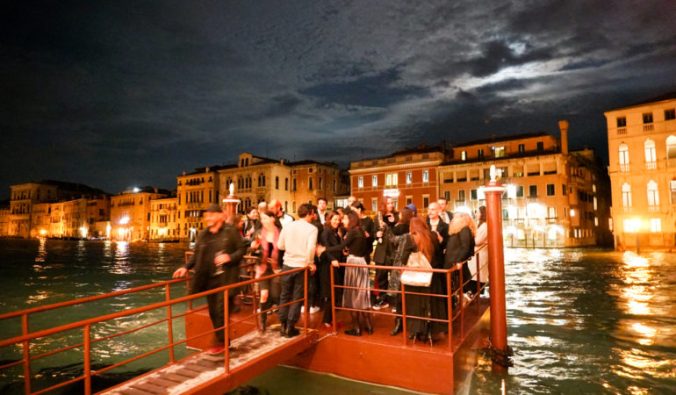
Ci si sveglia dal torpore ai padiglioni nazionali. Guardando l’avvolgente film sulla paura di Moataz Nasr, come si fosse all’interno di un villaggio egiziano. Si guardano e si ascoltano (si vorrebbe toccarli ma non si può) gli strumenti musicali in ceramica di Carlos Amorales, che sono anche le lettere di un alfabeto inventato con cui l’artista messicano racconta tragedie di migranti al confine con gli States e i tanti femminicidi, le tante morti nel suo paese che la nostra lingua franca non riesce a spiegare. L’artista turca Enit Okan ha recuperato migliaia di abusi della polizia di Erdogan ai danni dei suoi concittadini e li ha messi in mostra al Padiglione dell’Umanità. In quello iracheno l’archeologia del passato remoto dialoga con artisti contemporanei. Il libanese Zad Moultaka ha installato il motore di un aereo da bombardamento in uno dei capannoni alle Tese dell’Arsenale: la luce sale gradualmente fino a illuminarlo come su un palcoscenico. A quel punto, dal metallo arriva la voce di un bambino, come fosse rinchiusa nella scultura. Scandisce, in arabo, un lamento antico 5 mila anni, sulle stragi d’infanti durante la guerra remota che portò alla distruzione della città sumera di Ur, in Mesopotamia. Ancora il mondo capovolto e specchiato in penombra di Andreotta Calò al Padiglione Italia insieme alla superdark Imitatio Christi di Roberto Cuoghi. L’aria disturbante dei tempi continuava anche a tarda notte. Perfino le feste, di solito rilassate, della vernice, erano sorvegliate da plotoni di men in black con auricolare, tra cui meritano una menzione quelli ingaggiati al party del gallerista Perrotin alle Tese, educati come i rematori di una galea del ‘500 alla battaglia di Lepanto.

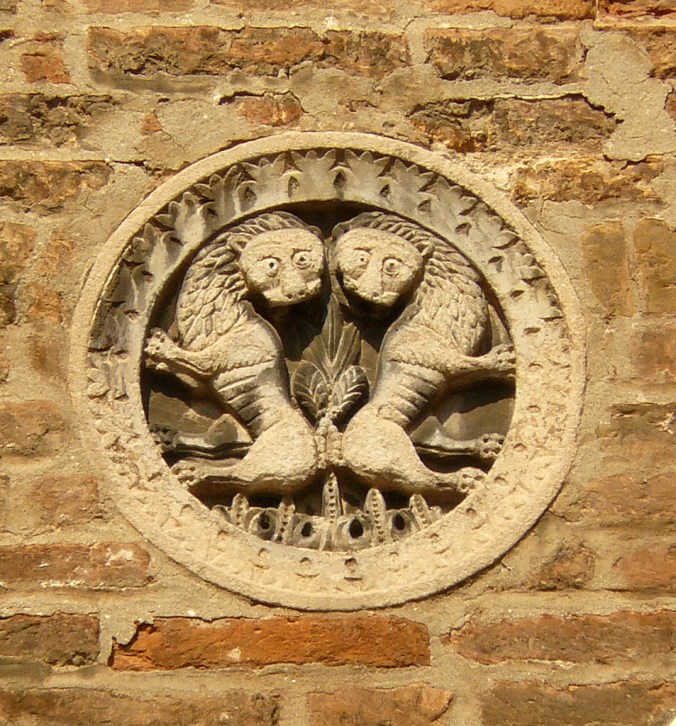
Se la musa di Christine Macel è didascalica e compunta, le muse veneziane amano le stramberie. E l’hanno spesso vinta. Allora è il caso di farlo strano, questo tour lagunare. Scegliendo richiami segreti. Come fa la mostra Intuition a palazzo Fortuny dove viene allestito un atelier onirico, tra informale e surrealismo, sculture primitive e spontaneismo ludico che sarebbe piaciuto ad André Breton e Antonin Artaud. La Serenissima città è costruita per le corrispondenze magnetiche. L’archeologia mesopotamica in mostra al padiglione iracheno rimanda alle formelle sparse per i muri dei sestieri, raffiguranti simboli alchemici e bestiario favoloso. Una porta di fumo al Fortuny proietta l’immaginazione e i piedi sul portale medievale in pietra di un giardino sulle fondamenta di Ca’ Balà: gli esperti di toponomastica non si sono ancora messi d’accordo se il nome deriva dal baccalà, che veniva lavorato ed essiccato a pochi metri, o dalla Cabala ebraica, i cui riferimenti a Venezia non si contano, alla Basilica della Salute come all’isola della Giudecca.

Motion Picture Drawing di Susan Morris alla mostra Intuition/ Susan Morris artwork at Palazzo Fortuny show
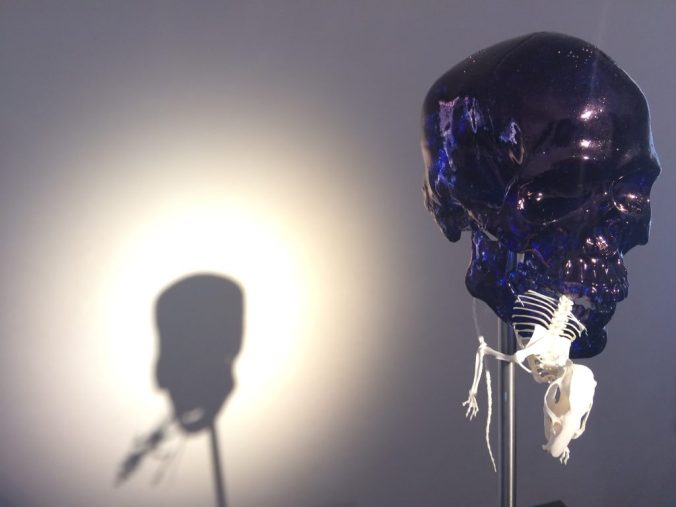
Jan Fabre, Bones and Glasses a San Gregorio
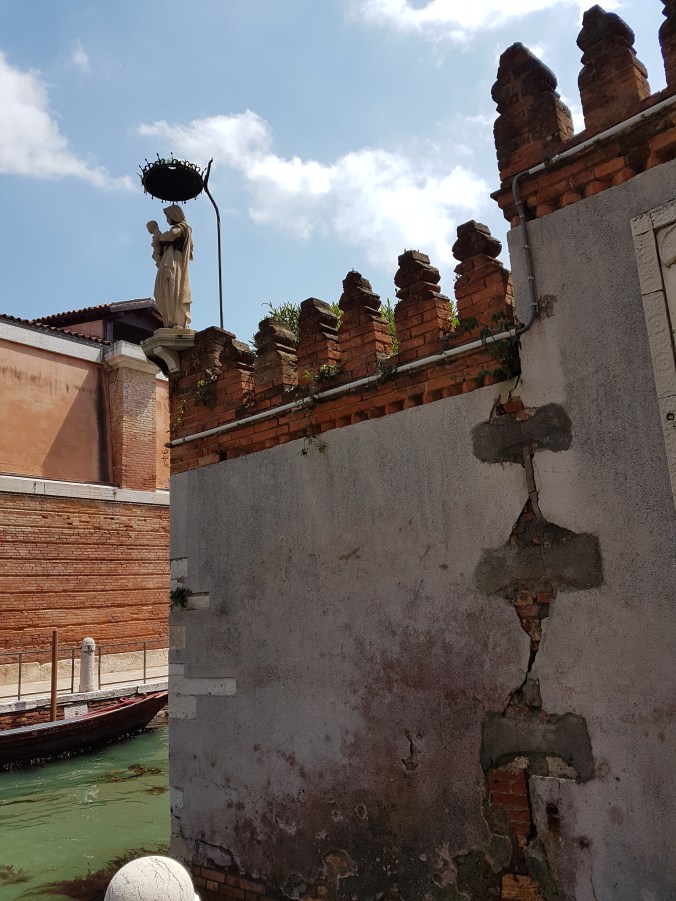
Fondamenta Ca’ Balà
Vicino Ca’ Balà, nel chiostro dell’abbazia di San Gregorio, Jan Fabre ha creato un universo reale e fantastico, fatto di sculture di vetro e osso, opache e lucenti, tornite e grezze. Manufatti dal principio di una storia alternativa, chissà, da una dimensione parallela, come indica un’opera che consiste in una canoa di osso dove le pagaie terminano con mani di vetro blu: Da un’altra faccia del tempo è il titolo. La proiezione è verso un tempo interiore, misterico. Tutt’altra faccenda, per temi simili, a Punta della Dogana e a Palazzo Grassi, dove la mostra archeo-horror-fantasy di Damien Hirst parte da un’idea buona per naufragare nel kitsch. Treasures from the wreck of the Unbelievable, tesori dal naufragio dell’Incredibile – ecco il naufragio è dichiarato. Il gioco è nell’esporre dei finti ritrovamenti dalla nave di un collezionista all’epoca dell’Impero di Roma, colata a picco (probabilmente per il peso) nell’oceano Indiano. I falsi (per lo più in resina, ma pure in marmo, oro, malachite ecc.) non evocano né richiamano; né epoche passate, né sognate. Forse viste al cinema in kolossal di serie B. Più che Fleba il Fenicio (i cui occhi divennero perle, nella Terra Desolata di Eliot), ti aspetti d’incontrare la fidanzata di Indiana Jones, perduta nell’arca. O Conan (il secondo non il primo), che gonfia i bicipiti per salvare una vergine stuprata da un minotauro culturista. Com’è stonata qui la Musa!
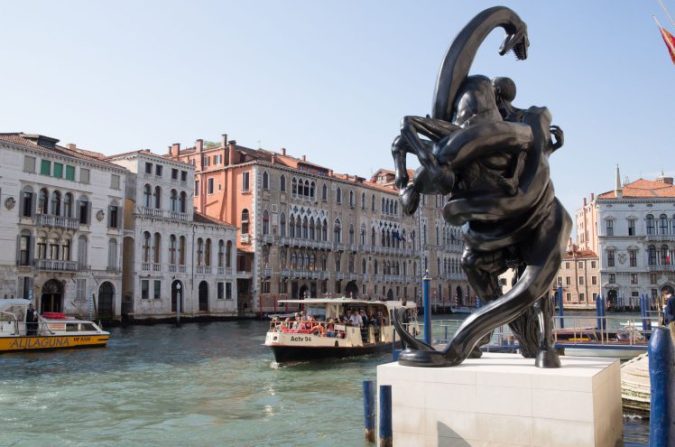
Damien Hirst – naufragio davanti a Palazzo Grassi, Canal Grande/ Hirst unbelievable wreck on Grand Canal
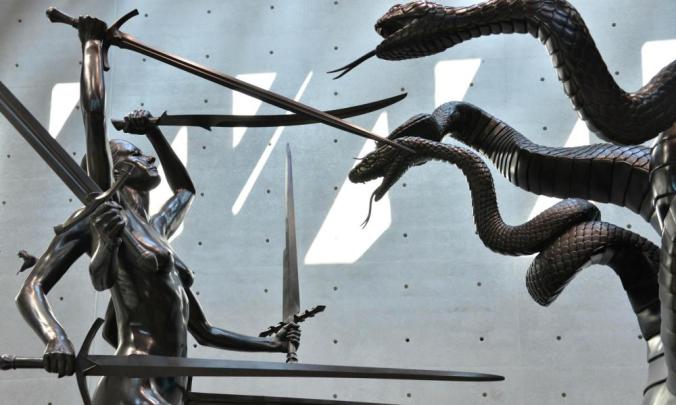
Dettaglio di un altro relitto di Hirst a Punta Della Dogana/ Another relic from Hirst wreck at Punta della Dogana
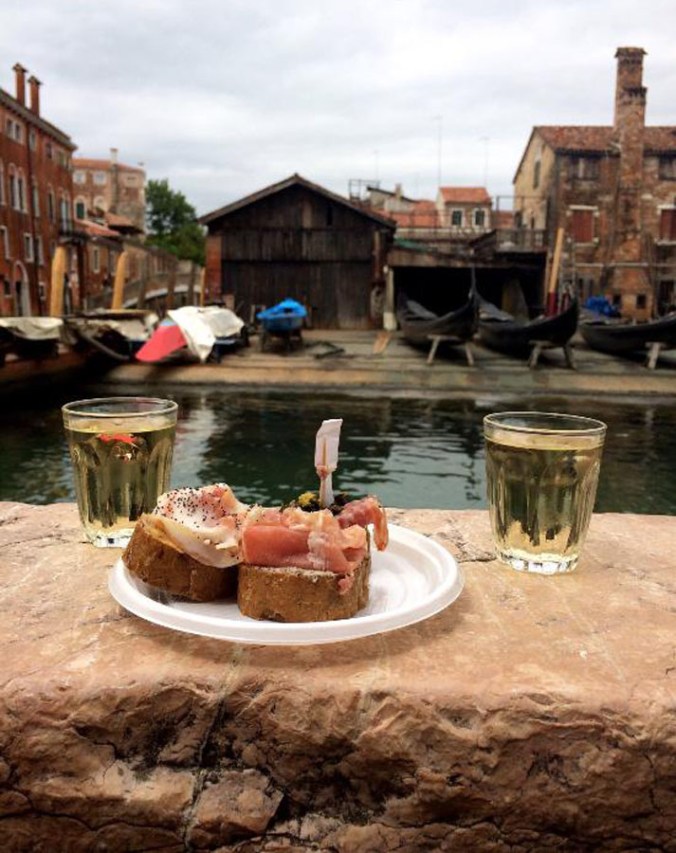
Alsquero Dorsoduro
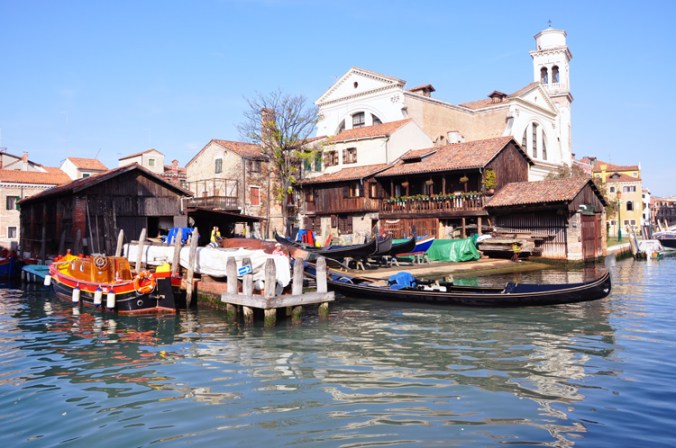
Per riprendersi dalle civiltà perdute di Hirst serve un cicchetto. Sulle fondamenta Nano, l’osteria Alsquero serve assaggi veneziani e spritz con vista su un rimessaggio di gondole. Quasi tutte le camere hanno la vista a Venezia. La migliore tra quelle che non ce l’ha, si trova in questi giorni all’Istituto di Scienze, Lettere e Arti nell’atmosferico palazzo Loredan in campo Santo Stefano. Durante la Biennale ospita il padiglione cubano per la mostra Tempo de la Intuicìon. In una delle sale della vecchia biblioteca, il posto dei libri è stato preso da piante cubane e toscane chiuse in contenitori di vetro retroilluminati. Come ampolle di alchimista? O come un bar hi-tech sugli scaffali di legno lustro? In ogni caso: Cuba Libre!
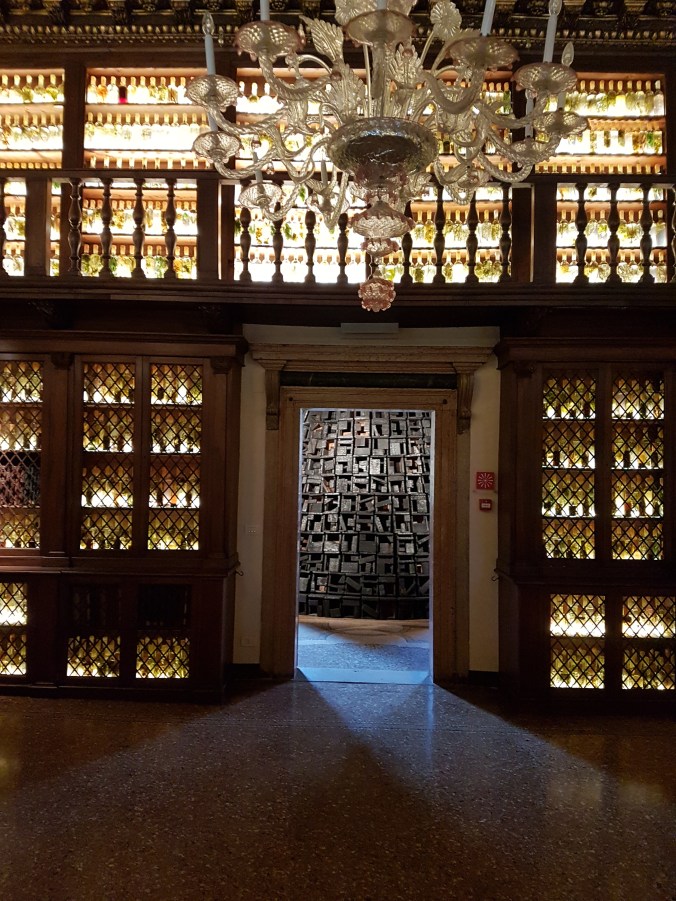
Padiglione cubano/Cuban Pavillion, J. E. Yaque

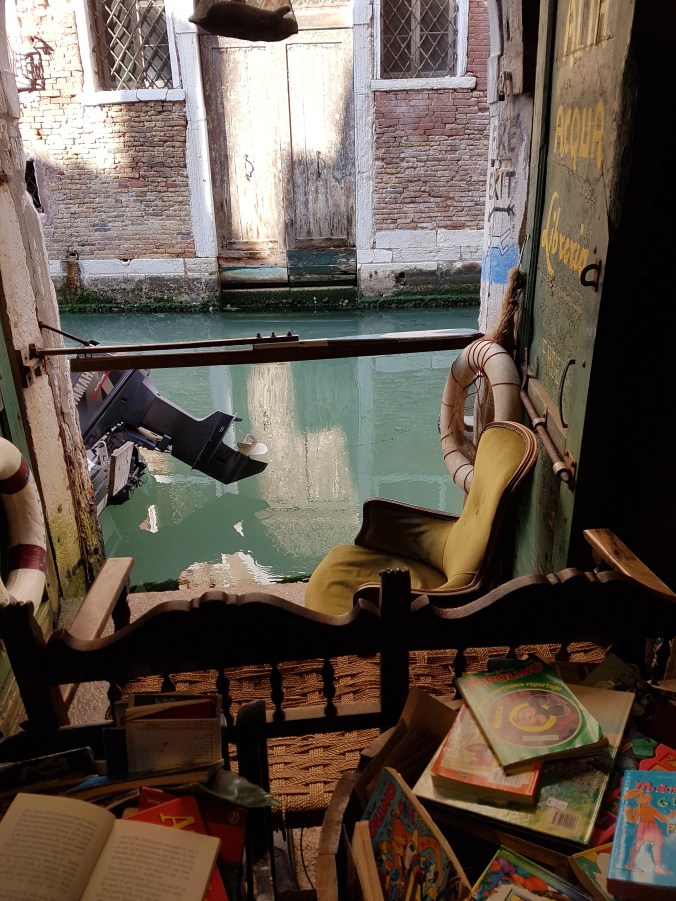
Libreria Acqua Alta/Acqua Alta Bookshop
Ha la vista – minima – e la poltrona di lettura su un canale la libreria Acqua Alta, a Castello. Con i libri stipati – o meglio stivati, in una gondola, una scialuppa e una vasca da bagno, sembra un’istallazione della Biennale. Non si capisce come facciano a trovare i titoli. Eppure al bancone assicurano che ci riescono. Basta allenare la memoria in senso spaziale, come faceva Pico della Mirandola, nel Rinascimento. Che a Venezia non si sarebbe perso.
Per l’universalità della sua cultura avrebbe compreso il rapporto tra Philip Guston e i poeti che lo hanno ispirato, in esposizione nelle gallerie dell’Accademia. È il primo dei contemporanei ad avere l’onore degli spazi interni dell’Accademia. Nei quadri di Guston si rintraccia qualcosa del ciclope e dello scienziato al microscopio, sentori di surrealismo, vignetta, disegno leonardesco, iperrealismo che non si mischiano. Si giustappongono. Come le parole ai colori e ai segni. La moglie di Guston si chiama Musa. Un quadro contiene dei suoi versi, trascinanti di nostalgia da una terrazza su Roma alla mancanza del suo compagno. In questa città straniera, si chiede, sarà diverso il profumo dell’oleandro? Forse straniero e nuovo e strano, come ogni mattino in cui si sveglia la musa e fa colazione con i pensieri del mondo.
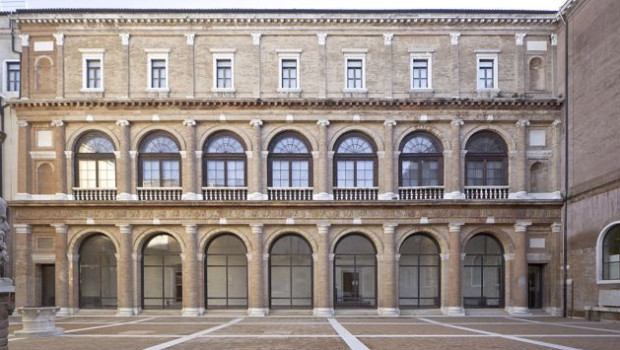
Gallerie dell’Accademia, ala palladiana
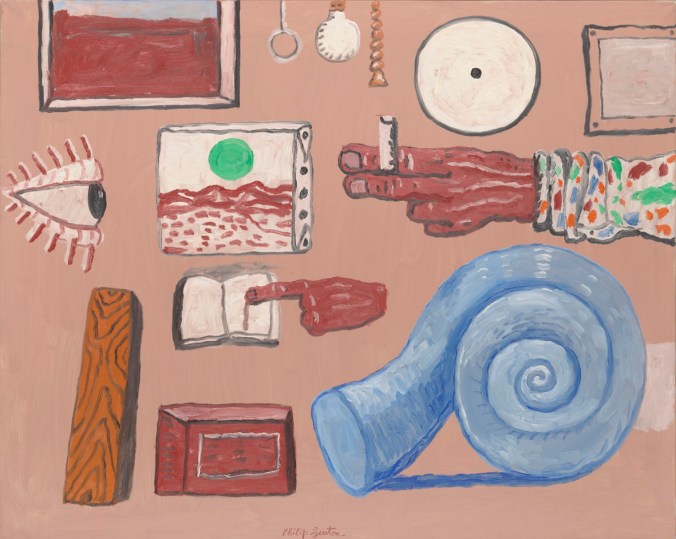
Philip Guston Story 1978
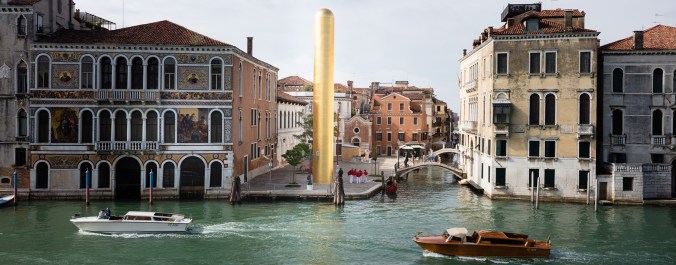
James Lee Bayers, Golden Tower, Canal Grande
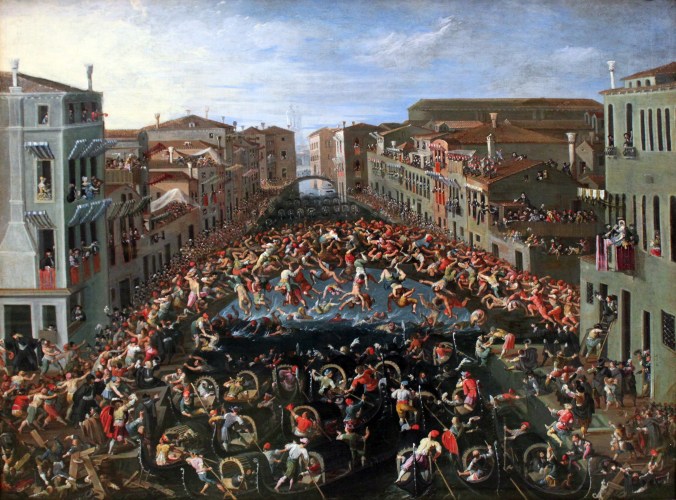
Pugna sul ponte dei pugni in un dipinto di Heinz Wettsreit del 1673/Fight on ponte dei pugni in a 1673 oil painting by heinz Wettstreit
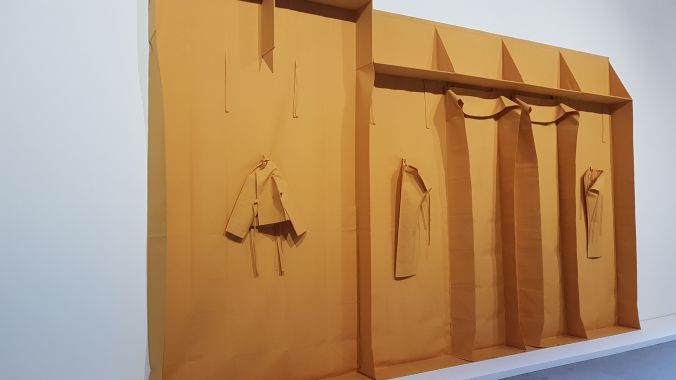
All’Arsenale: arte o Interior design?

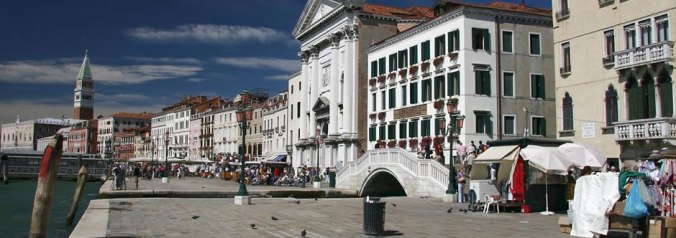
Riflessi Veneziani/Venice Reflections
STRANGERS IN VENICE


You could have met them around the Gardens at the Venetian Biennale opening: two muscular, nervous, curious dobermann dogs always at lashes, crawling through the crowds along the pavillions. They were part of the senses disturbing, S/M indulging performance orchestrated at the German pavillion by Anne Imhof, this year Golden Lion winner. A significant part, I would say. The lion stays, the dogs disappeared, just after the preview days. Some animalist organization asked for their retirement. Would have Anne won without the dogs? Who knows it! However it is a sign: when the arts tell about the threats and the fears of our troubled times, they cross the path with the politically (animal?) correct issues of our hypertense, multi-sensitive society.
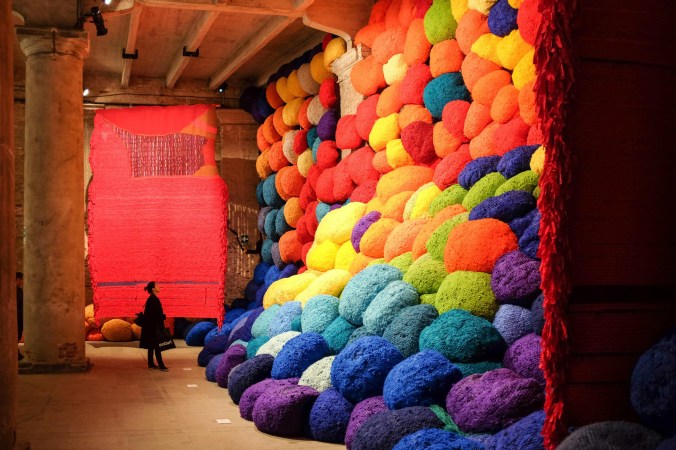
Arsenale, l’installazione di Sheila Hicks
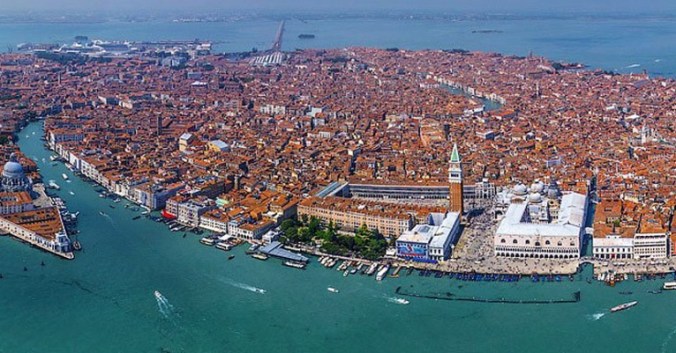
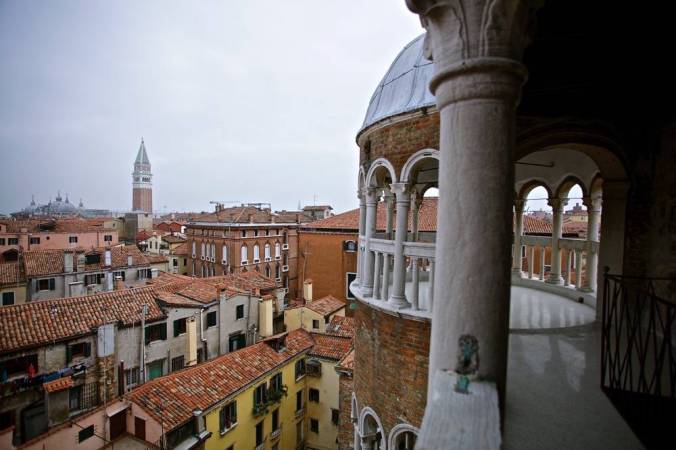
It is so easy feeling like a stranger in Venice; even after ten Biennals, countless shows, labyrinthic strolls, Carnivals and visits, going astray in the sun, in the wind, in the light or in the dark, in a lonely calle or in a people jammed bridge along Riva degli Schiavoni. Google map looses his direction here, confused in a hidden mosaic of campi, campielli, rami, calli, rughe. It can be fun: you cross a bridge to find a portone, the private entry of a palace, you slip into the hall and gets out on a calle again. You socialize asking directions. Sometimes even natives are perplexed about locations. Depends on which Sestiere (burough) they are used: a person living in Cannaregio may have his problems in Castello and viceversa. The residents of sestieri (San Marco, Santa Croce, San Polo, Dorsoduro, Cannaregio, Castello) rushed with sure istinct only to fight each others in epic brawls on specific bridges (Ponte dei pugni, bridge of the fists, takes its name from these very physical disputes). The babelic undertone of different languages helps misunderstadings and displacements. I don’t remember any artist who create an artwork on confusion in a Venice Biennale. It could be a blast. Venice has been a commercial and cultural hub since the middle age and our age is quite confused.
Christine Macel’s Biennale instead is crystal clear, politically correct, positive-thinking, creepingly boring. Paved with boredom. At the Arsenale, textiles and embroideries, cocoon made of wool, jungles of cotton are everywhere, hanging from ceilings, stuck to walls: all soft and spoof. Pieces of books like in other thousands exhibits. Monochrome wardrobes, more apt for an AD cover than for a display at the world’s biggest art show. You walk through the less convincing images by Kiki Smith; you pass repechages of artists sentences from the Sixties, joking about art meaning. All so pretty! A didactic show with no misteries. A Montessori Biennale.
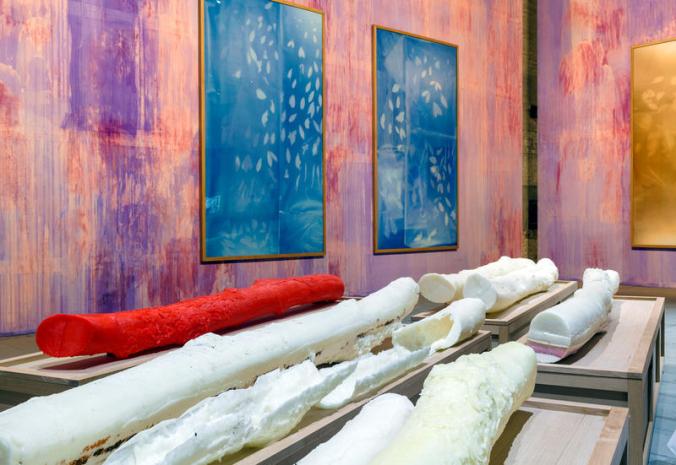
Thu Van Tran, Red Rubber
Luckily a short trip on vaporetto to the island of San Giorgio to visit the shows of Michelangelo Pistoletto and Alighiero Boetti and a good pick of few national pavillions excites a prompt awake from such torpor. In the Egyptian one, the viewer is immersed in the life of a village between mountain and desert, where the fear of an unnamed demon dominates the daily (and nightly) life of the villagers. Moataz Nasr created a sort of ambient art installation with the curve screen for a film in which he tells the story of a brave woman coming back to hometown to confront the demon, he put real desert sands on the floor and sets a sober and somber theatrical scenography all around the viewers: fear is wraparound. Sculpture become music, objects are an alphabet that tells a story in subtler ways than our media usually do, in Carlos Amorales exhibit at Mexican Pavillion: he made ceramic musical instruments, flutes and ocarinas, all black, looking like artificial alphabetic signs, that can be translated in a current language. He uses it to tell us sorrowful stories of migrants across Mexican – U.S. border, during the performance the ocarinas are sung and meanings and forms take a slow dreamy dance. Words are real weapons? Are they still a counter-power? Turkish artist Enit Okan exhibiting at Pavillion of Humanity thinks so: she recovered thousand of abuses committed and reported by Turkish police during the Erdogan era, an archive of sovereign abuse.
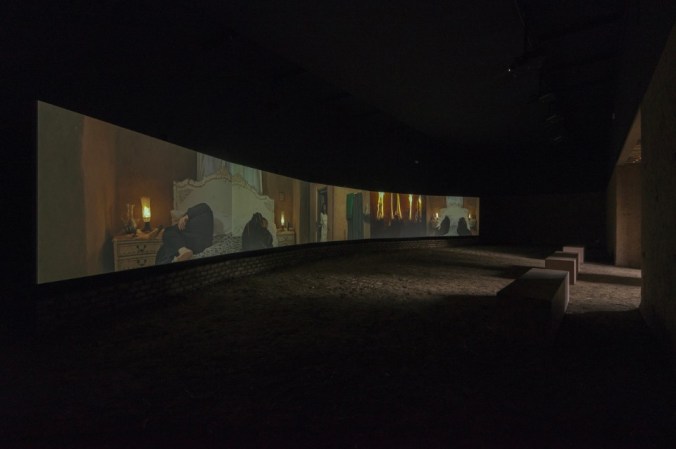
The Mountain, installazione video di Moataz Nasr/ The Mountain video installation by Moataz Nasr
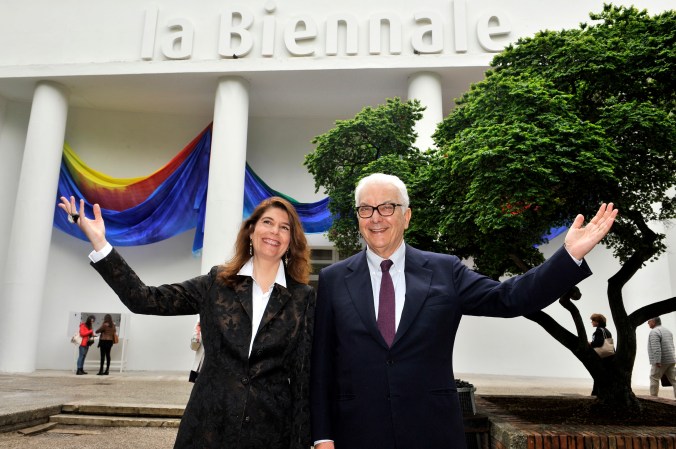
Curator Christine Macel with Biennale President Paolo Baratta
As theatrical as Moataz installation is another ambient work of art in the Lebanese pavillion at the Tese: you walk into the large obscured hall that was once a shipyard of the Serenissima Republic while yellowish lights dramatically rise on the walls; till the spotlight is on a metallic sculpture that is a real engine of a bomber airplane used during the Lebanese wars. Like a sad genius in the lamp, a tiny recorded voice come from the engine: a child voice speaking arabic and sounding like a remote warning. It is a lamentation indeed, explains the artist Zad Moultaka, written 5000 years ago about the slaughtering of children during the destruction of the Sumer city of Ur. So far, so close. Lights go down with the last words as curtains on a stage. Same feelings in the noteworthy this year Italian Pavillion showing the uber dark Imitatio Christi by Roberto Cuoghi and the obscure end of the world by Giorgio Andreotta Calò, a world that seems to survive only in a somber reflection. The disturbing zeitgeist took on even the celebrated party nights at the Biennale: men in black were everywhere, a special mention is due to the ones at the Perrotin party at the Tese, as polite as a crew of rowers in a galea at Lepanto battle.
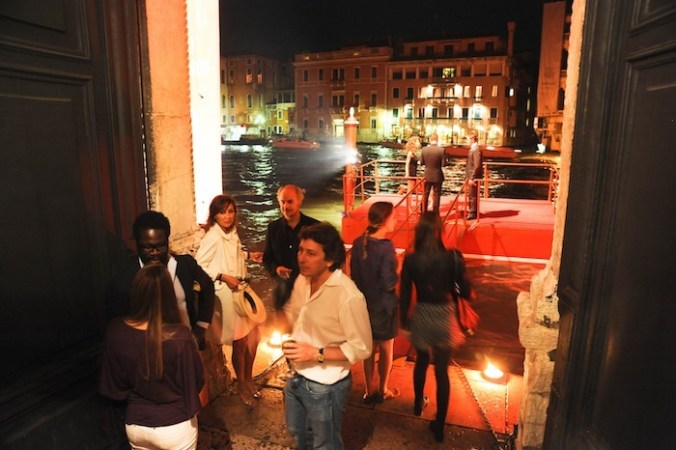
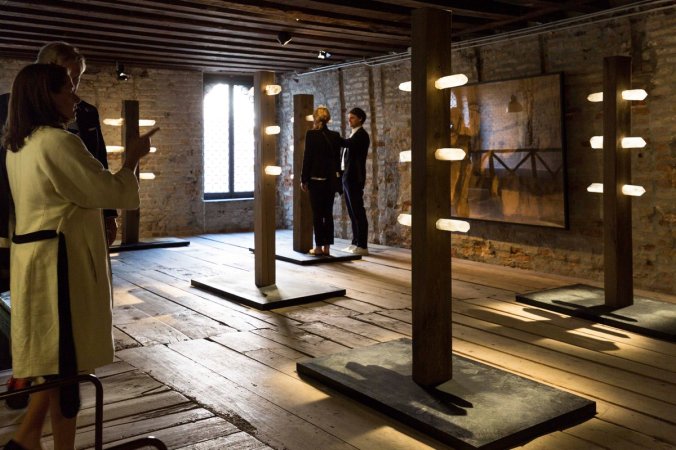
Inside Intuition at Palazzo Fortuny
If Christine Macel’s muse is didactic and contrite, Venetian muses love weirdness instead. They know how to prevale too. Let’s get weird then. For instance, at the show Intuition at Palazzo Fortuny, which in the last Biennales worked as a nuance of completion to the curators official exhibitions or as a counterpoint to them. In this case, the Palazzo, staged as an atelier of a contemporary and cultivated Des Esseintes, looked like it was haunted by the ghosts of the past Biennales. Especially the ones conceived by Gioni and Szeeman. Objects from primeval cultures and abstract artists fond of calligraphy, surreal and archeological magnets, a table to play with plaster balls, everything was like a forest of signs in Baudelairian sense, or a laboratory of an artist-alchemist-philosopher, just that it is assembled in the halls of an ancient palace that was once a laboratory of an artist enterpreneur: Mariano Fortuny who dressed princess in the real world as in the fictional one, like the Duchess of Guermantes in Proust’s à la Recherche du temps perdu.

Matta, De Kooning, Tobey and others at Intuition, Palazzo Fortuny
Venice, the Serenissima, is built for getting lost and for magnetic correspondances, the kind Andrè Breton would have praised as he would have liked the Intuition show. Here the archaelogical pieces exhibited at the Iraqi Pavillion recalls in secret ways the patere, circular slabs in Greek marble or Istrian stone, disseminated along the whole city, some carrying the carvings of misterious symbols and faboulous animals. A portal made of smoke at the Fortuny projects the imagination (along with the feet) to a romanic front door of a garden house, at the end of Fondamenta Ca’ Balà, a toponomy that can derive from the smoked cod fish, baccalà, that was worked nearby, or from the hebraic esoteric science of Kabbalah, that, in number and signs, is hidden in many venetians corner, starting from the famous Basilica della Salute, not far from the Fondamenta.
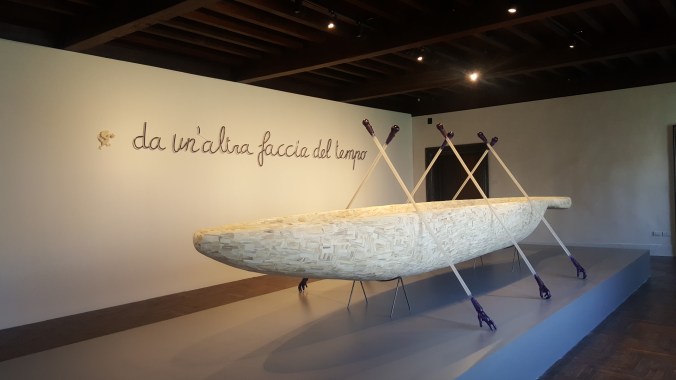
Jan Fabre at San Gregorio
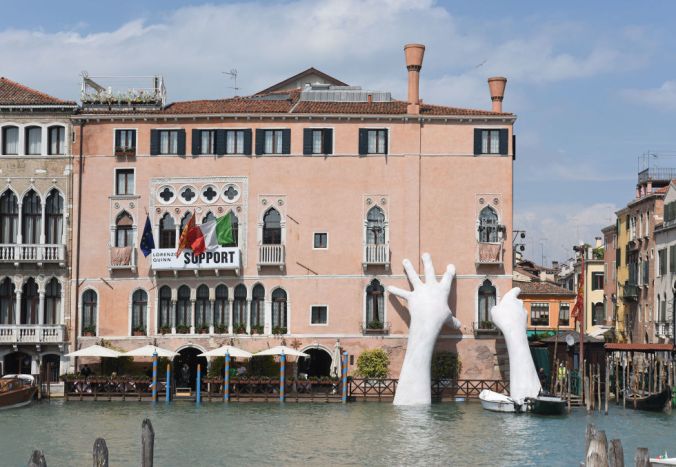
The closter of San Gregorio Abbey is also close: here and in the rooms of the religious building, Belgian artist Jan Fabre invented a parallel dimension, or the remainings of it. From another world, another time. The title of an artwork, a canoe made of bone and oars ending in hands made of blue glass, tells it clear: From another face of time. The time of the artist is interior and misteric. Like his sculptures of skeletons and tools, all bone and glass, smooth and raw, cold and organic, dense matter and oblique transparence. A total different stuff is on exhibit at Palazzo Grassi and Punta della Dogana, the two prestigious spaces held by Pinault foundation. It is a larger than history one man show, what British artist Damien Hirst has conceived: he filled two museums with fictional archeological relics from an ancient art collector’s supposed sunken ship. “Treasures from the wreck of the Unbelievable” the title’s show says and it is a wreck in a sea of kitsch. Sculptures and groups made of resins and marble, with some jewels in gold and malachite, this is one ot the most expensive and colossal fake in the art history. It is a fake that doesn’t want to be believed (as the title suggests and a statue portraying the artist collector holding Mickey Mouse’s hand confirms). There is an intentional irony in the cruel and monstruous artifacts from a supposed array of cultures from Greek to Aztechs, from buddhist smiling statue to a Minotaurus fucking off a screaming virgin, but the smile does not reach the viewer face. A sense of sea-sickness instead (maybe an evocation of the false wreck) gets to the stomach. Everything, from the mythical figures to the orgiastic groups, look like abandoned props from a Hollywood B-movie set. You expect to meet Indiana Jones girlfriend here or Conan the Barbarian (the sequel, not the Milius’one) to fight a revived monster. Phlebas the Phoenician from Eliot’s memory would be out of place (those are pearls that were his eyes, look!). The problem, keeping on with Eliot’s quotes, is that Hirst leaves a Waste Land on art world after every operation. This time he declared that, once exhibition is closed, he will sell the show in pieces to avid and uncultivated collectors. Another twist in art and market relationship. Wherein I don’t see any irony at all. I hear a muse out of tune and the sound of cash.
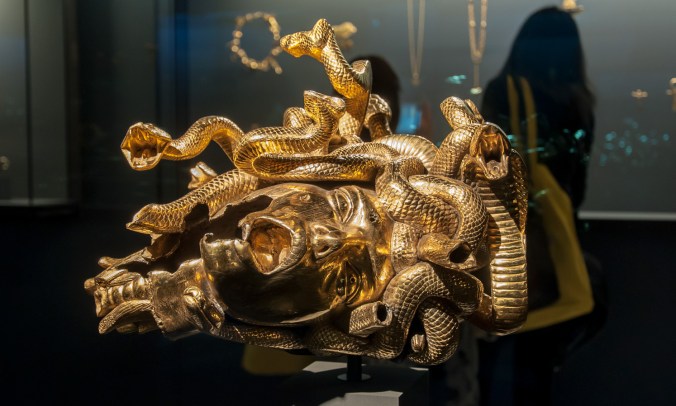
Such a Trash, Damien Hirst – Unbelievable at Punta della Dogana and Palazzo Grassi
Nothing better than a Venetian cicchetto to regain senses after wandering among Hirst lost civilizations. So Alsquero, a typical but young osteria in Fondamenta Nano, just in front of a gondola rehab, is the right place to have a prosecco, spritz and tartine and get refreshed. You have a great view too! Not that is uncommon in Venice, where most of the rooms have a view, at least a slice. Among the rooms without a view, probably the most charming is inside the Institute of Letters, Sciences and Arts, the atmospheric palazzo Loredan, in campo Santo Stefano. On display, there are the works by a group of artist for the Cuban Pavillion. In a room, usually the shelves are filled with venerable books which have been replaced for the time of the Biennale by cylindric glasses containing plant roots from Cuba and the Italian region of Toscana. The vegetables in a bottle have a backlit effect, so to transform the library in a contemporary alchemist laboratory or in a supercool bar. Cuba libre!
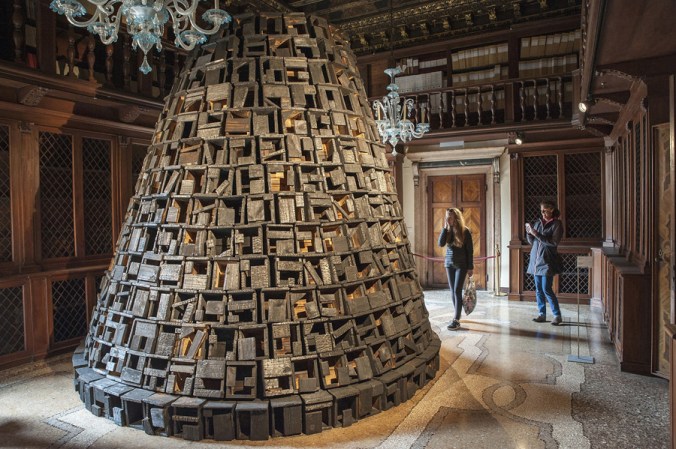
Al tempo de la intuicion, Cuban Pavillion. Palazzo Loredan
View is tiny but striking from a reading armchair, pied dans l’eau, almost touching the water of a canal, at bookshop Acqua Alta in the sestiere of Castello: here books are stowed in bulk in a gondola, a lifeboat and a bathtub. The ambient could rival many artist installations at the Biennale. It just seems difficult to track a title, but the man at the counter assures that is a matter of seconds. Maybe he trained his memory to have a spatial sense as Pico della Mirandola, the wunderphilosopher of the Renassaince, used to do. Pico, with his sense for a total culture would have praised Philip Guston’s exhibit at Gallerie dell’Accademia. For the first time the magnificent location has opened his interiors to a contemporary artist (in last Biennale, Mario Merz installations were hosted in the courtyard). The focus is on the relationship the American artist had with poets – his wife wrote verses too. Guston drawings are powerful, and his surrealist paintigs are difficult and powerful, inspiring (he inspired many cartoonist of graphic novels age for instance) and refusing. I couldn’t help to to be immersed in a painting-drawing inscribed with few lines written by his wife, expressing loss for her man and wanderlust for the place, relaxing on a terrace over the roofs of Rome. Will the oleander have same scent in a stranger city, she demands to the viewer. Oh, the painter’s wife has a proper name: Muse.
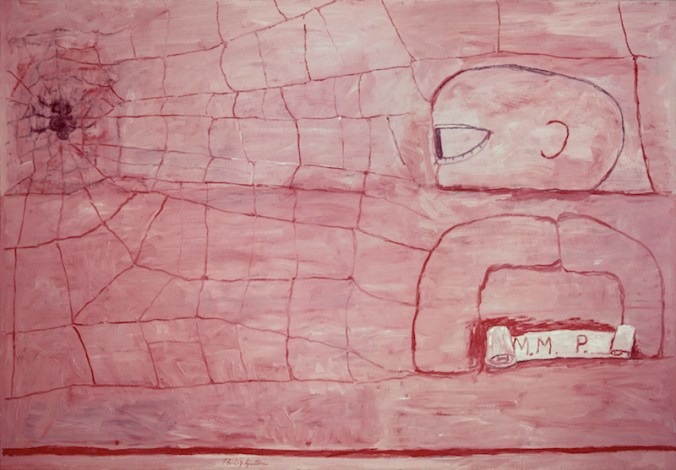
Philip Guston at Gallerie dell’Accademia, warp crop
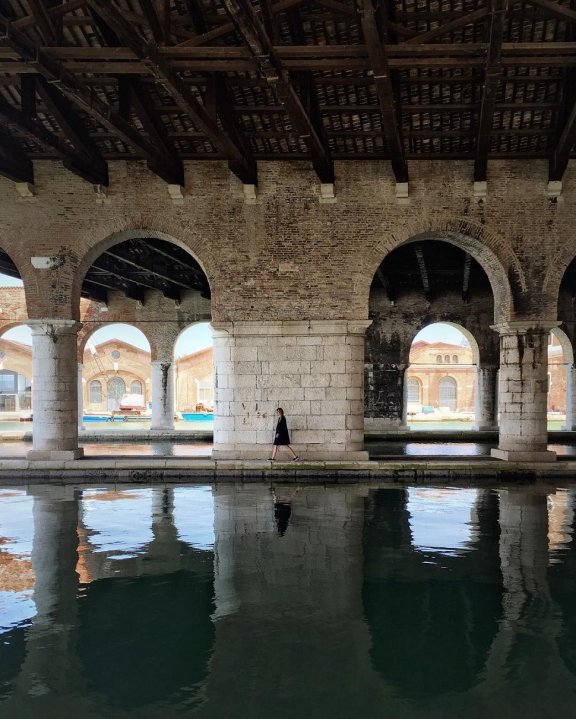

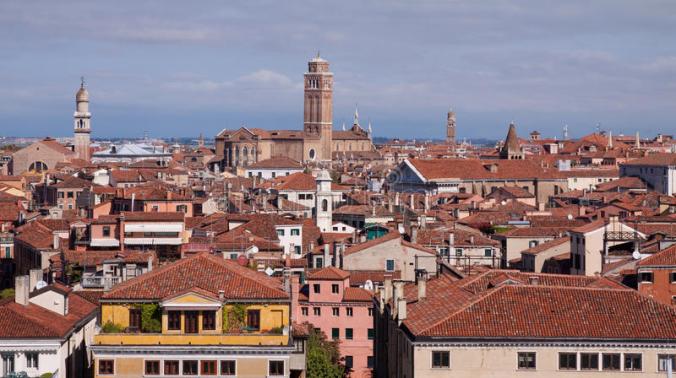
Elisabetta di Maggio, Natura Quasi Trasparente, Fondazione Querini Stampalia
 Ways of Escape