Nord America
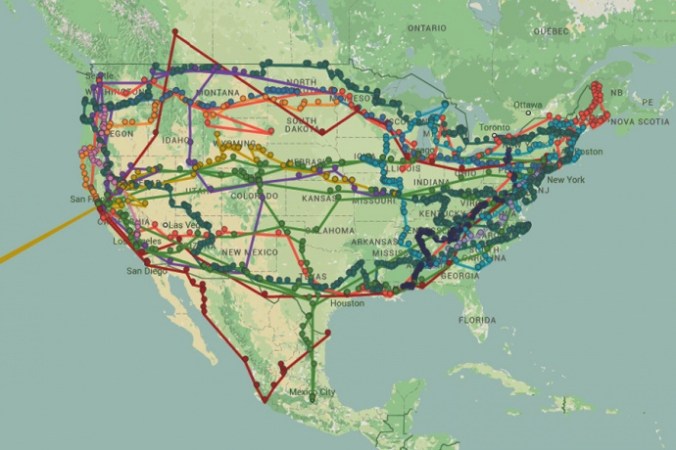
La mappa di Kreitner e Melendez sul sito Atlas Obscura/Kreitner and Melendez map on Atlas Obscura
Nella letteratura americana la parola è vagabonda. Per costituzione, più che per definizione. I racconti dei viaggi nel nuovo continente hanno accompagnato l’espansione degli Stati Uniti; la corsa verso il West è stata anche una maratona di libri. La prima traversata coast to coast ad andare in stampa è quella del giornalista Samuel Bowles, l’amico e corrispondente di Emily Dickinson. Il suo Across the Continent fece sensazione nel 1865, quasi un secolo prima che la coppia Jack Kerouac e Neal Cassady si lanciasse con voluttà beat sulla strada. E sono rimasti selvaggi i sentieri percorsi e descritti, dal Nevada all’Oregon, da Cheryl Strayed nel suo recente Wild.
Se le antologie e i saggi sulla narrativa on the road made in Usa riempiono biblioteche, è la prima volta che gli itinerari di grandi scrittori vengono riuniti in una mappa interattiva. Gli autori sono lo scrittore Richard Kreitner e il giornalista freelance Steven Melendez che hanno messo la mappa online sul sito web Atlas Obscura.
Sulla Ossessivamente Dettagliata Mappa dei Più Epici Viaggi su Strada della Letteratura Americana (questo il lunghissimo titolo) s’incrociano le rotte di Tom Wolfe e Francis Scott Fitzgerald, di Jack Kerouac e John Steinbeck. Kreitner e Melendez hanno scelto dodici capolavori della letteratura di viaggio americana: il primo, in ordine cronologico è Roughing It (In cerca di guai) di Mark Twain, pubblicato nel 1872, viaggio in diligenza prima dell’era delle ferrovie; l’ultimo è Wild di Cheryl Strayed, del 2012, unica donna sulla mappa. Epoche diverse, sguardi diversi. Non è stata una scelta facile per Kreitner, che si definisce un fissato del classico viaggio americano sulla strada. Durante gli spostamenti in metropolitana trascrive brani che lo colpiscono. E che sono finiti nella mappa, di cui ha curato i testi (Melendez è responsabile del progetto grafico). “Abbiamo messo alcuni paletti. Per entrare nella mappa, un libro doveva avere uno svolgimento narrativo che corrispondesse all’arco cronologico e al percorso geografico del viaggio raccontato. Doveva essere un viaggio vero, non di finzione. O almeno doveva essere narrato in prima persona, come On The Road di Kerouac ”.
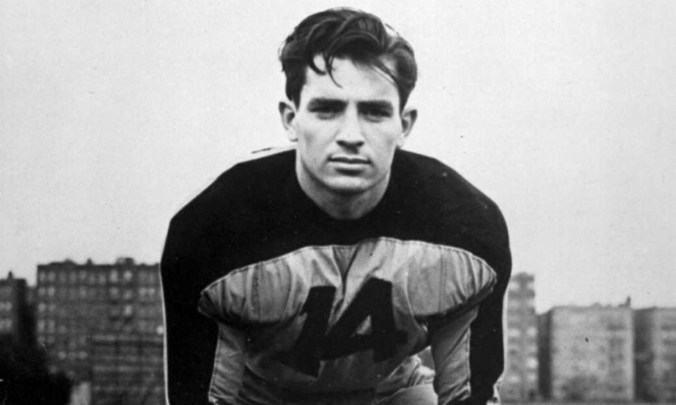
Jack Kerouac da giovane/Young Jack Kerouac
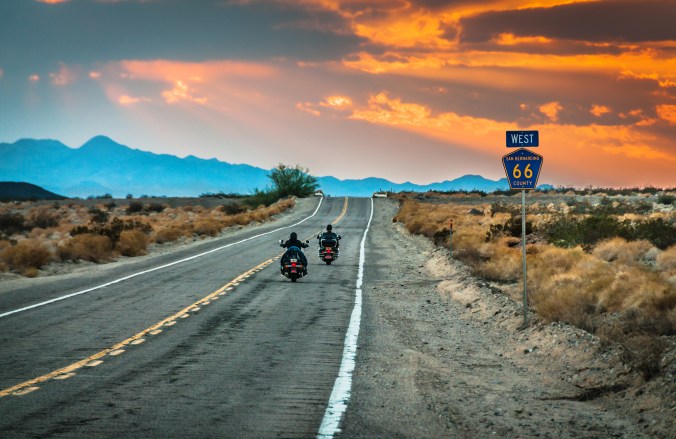
Motociclisti sulla Route 66/Route 66 Riders
Così è rimasto fuori Lolita di Vladimir Nabokov, perché le parti di viaggio eludono il riscontro topografico. E’ entrato, invece, Lo Zen e l’Arte della Manutenzione della Motocicletta, di Robert Pirsig, bibbia anni ’70 del viaggio su due ruote. Non aveva la carta geografica in regola neppure Paura e Disgusto a Las Vegas di Hunter S. Thompson, nonostante la epica Chevrolet cabrio rossa, stracarica di droghe, popper e bottiglie. Fa parte della lista, a pieno titolo, La Crociera del Rottame Vagante di Fitzgerald, in cui Scottie e Zelda, dal Connecticut all’Alabama, rischiano di perdere i pezzi dell’auto, ma tengono ancora stretti i sogni. Di Steinbeck troviamo Viaggio con Charley, il suo barboncino francese vagamente snob a bordo di un caravan battezzato Ronzinante come il cavallo di Don Chisciotte.
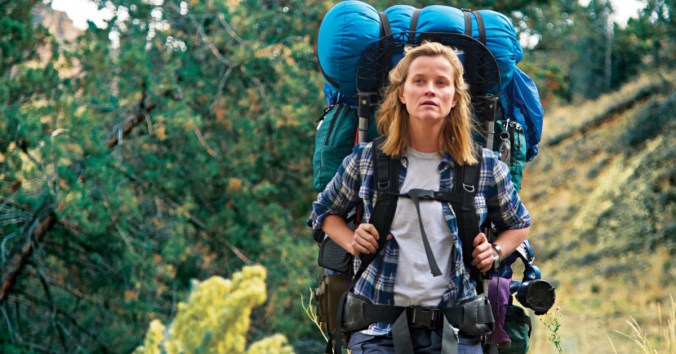
Cheryl Strayed
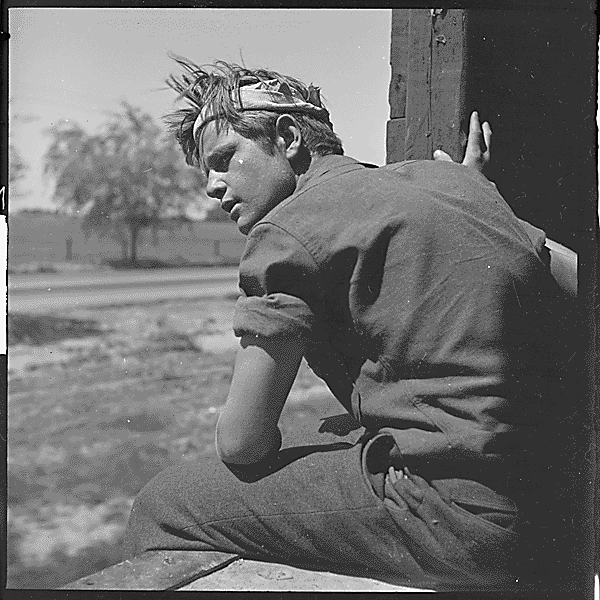
un hobo sul treno/Hobo on the rail
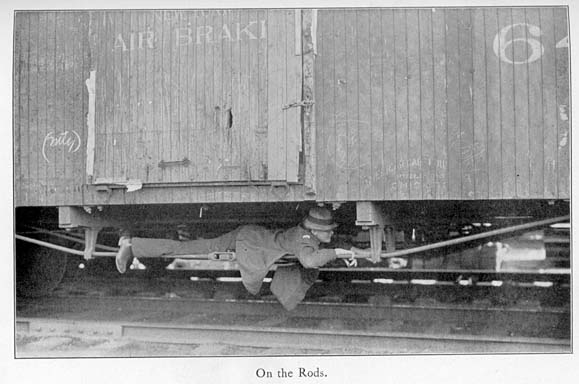
Ci sono gli itinerari e i luoghi di libri meno noti ai lettori italiani: i motel e le interstatali di Cross Country di Robert Sullivan; la lunga camminata di Peter Jenkins dallo stato di New York verso New Orleans in A Walk Across America. Rolling Nowhere, in cui il reporter Ted Conover si mette sulle tracce degli hoboes, gli abusivi dei treni. Ci sono le strade del mito: la route 66 e la Pacific Coast Highway. C’è l’America Perduta, e non sempre ritrovata, di Bill Bryson, esule per scelta. Ci sono best seller e libri di culto, come le Strade Blu di William Least Heat-Moon e il reportage psichedelico di Tom Wolfe del 1968, The Electric Kool-Aid Acid Test dove il vecchio Cassady (il Dean Moriarty di On the Road) sale su un bus molto lisergico insieme allo scrittore Ken Kesey e agli amici Merry Pranksters. Kreitner ha compilato un numero sterminato di citazioni, che si possono rintracciare cliccando sulle differenti rotte. Si seguono le orme del singolo scrittore, da città a città, da frase a frase. Ma è più interessante sovrapporre le linee e confrontare i passaggi. Le strade di On the Road e del bus dell’Acid Test si intersecano, si rincorrono e divagano fino in Messico. Twain sbarca alle Hawaii. Kerouac e Steinbeck incrociano i segni dei loro copertoni vicino Amarillo in Texas, a distanza di una decina d’anni. Il primo ammira i juke-box monumentali ma detesta le loro canzoni. Per il secondo il Texas “è uno stato mentale”. Robert Pirsig, William Least Heat-Moon e Cheryl Strayed rimangono straniti sul Crater Lake in Oregon, per la mescolanza di sacro (per i Nativi Americani) e commerciale (per i turisti). Il senso del wanderlust, espressione che indica il piacere quasi sensuale del vagabondaggio, lo troviamo in un brano di Heat-Moon su Oceanside, New York: “Ho allacciato la cintura di sicurezza, presso una gomma da masticare, inforcato i miei occhiali da mezzogiorno, pronto per la città. Si poteva pensare che stessi per andare sulla Striscia di Gaza. Invece era Islip, Babylon, Amytiville, Merrick, Oceanside”. La poesia delle mappe è anche una traiettoria di nomi e di luoghi, che finiscono sulla parola Oceano.
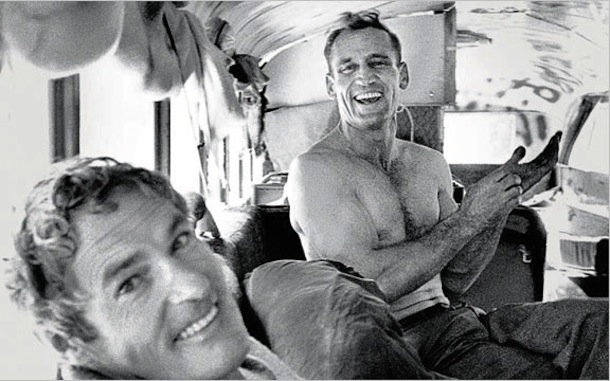
Neal Cassady sul bus con i Merry Pranksters/ Cassady aboard of the Merry Pranksters bus
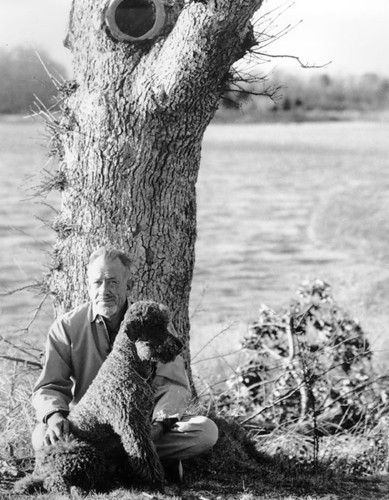
Steinbeck e Charley/Steinbeck with Charley
ON THE LITERARY ROAD

Una diligenza Concord, lo stesso tipo su cui viaggiò Mark Twain/A Concord Stagecoach, of same type Mark Twain travelled on
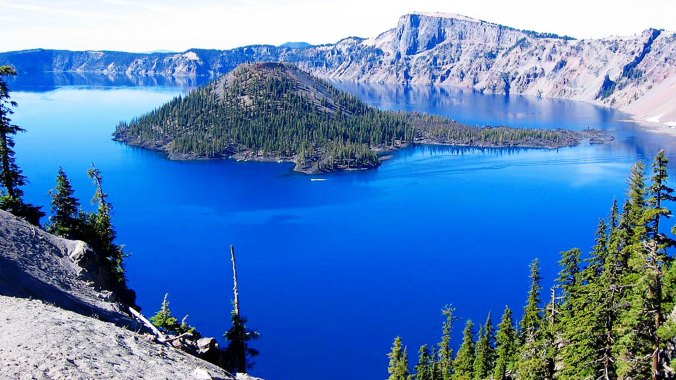
Crater Lake, Oregon
Words are rovers. Especially in American literature. For constitution more than by definition. The march to the West has also been a book marathon. The first coast-to-coast journey to be printed was written by Samuel Bowles, the friend and correspondent of Emily Dickinson. His book, Across the Continent was a sensation in 1865, almost a century before Jack Kerouac and Neal Cassady went voluptuously on the road. And paths are still rough, in Oregon and Nevada, where Sheryl Strayed walked by and wrote about in her recent book Wild.
If essays and anthologies of the U.S. on the road literature could fill several libraries, for the first time you can find the best of it in an interactive map elaborated, drawed and posted on the website Atlas Obscura by Richard Kreitner (writer) and Steven Melendez (designer). In their Obsessively Detailed Map of American Literature’s Most Epic Road Trips the steps of John Steinbeck cross those of Jack Kerouac, Tom Wolfe and Francis Scott Fitzgerald mix their routes. And Neal Cassady finds the ghost steps of his previous travels. Obviously not every literary trip finds its place in this map. The authors chose twelve travel masterpieces, starting with Mark Twain’s Roughing It – a 1872 stagecoach journey across the dusty plains before the railroads advent – and ending with Wild, published in 2012 – the only woman on the literary road map.


Not an easy task for Kreitner, a writer and a blog curator at The Nation review, who calls himself a “freak for the American road trip”. He used to read and underline excerpts while moving in the underground. This subterranean work surfaces on the lines of the map. Each line, a trip; each trip a book. “I hand-typed most of these 1.500-plus entries, and located their coordinates as best as I could” Kreitner writes in his post. “To be included, a book needed to have a narrative arc matching the chronological and geographical arc of the trip it chronicles. It needed to be non-fictional, or, as in the case of On the Road, at least told in the first-person. To anticipate a few objections: Lolita’s road-trip passages are scattered and defiant of cartographical order; The Grapes of Wrath’s are brief compared to the sections about poverty and persecution in California; the length of the trip in Fear and Loathing in Las Vegas is short in the geographical sense even if it is prodigiously vast in every other; and yes,The Dharma Bums is On the Road’s equal in every respect, and if you want to map the place-name references in all of Kerouac’s books, I salute you.”.
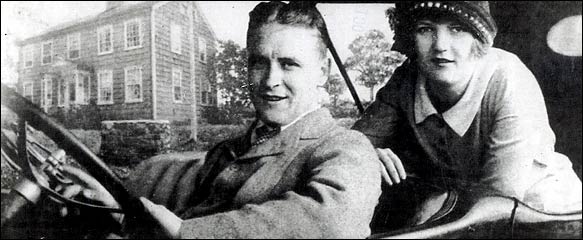
Scott and Zelda Fitzgerald
In the list, there are as extravagant tales as their authors. Take The Cruise of the Rolling Junk by Francis Scott Fitzgerald: Scottie and Zelda, from Connecticut to Alabama, risk to leave on the turf many pieces of their car, but they hold their dreams tight. John Steinbeck’s travel companion in Travels with Charley is a vaguely snob poodle; the van they ride is named after Don Quixote’s horse, Rocinante. There are cult books and best seller: Zen and the Art of Motorcycle Maintenance by Robert Pirsig was a must in the ‘70s and still has its affectionate readers. Blue Highways: A Journey into America by William Least Heat-Moon topped best sellers lists a decade later; the native American writer here shows a half poetic and half angry vein while redescovering the continent.
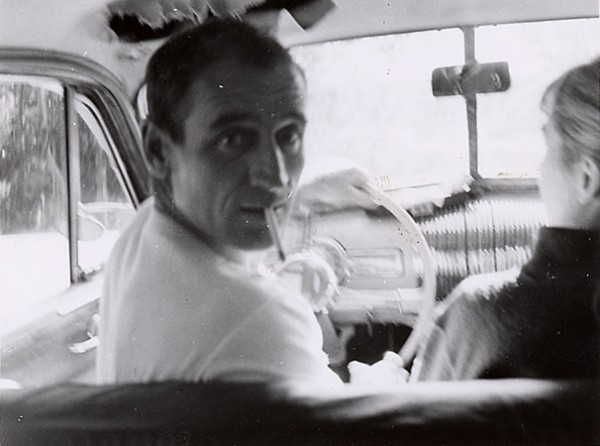
Neal Cassady fotografato da Allen Ginsberg/Neal Cassady in a Allen Ginsberg snapshot
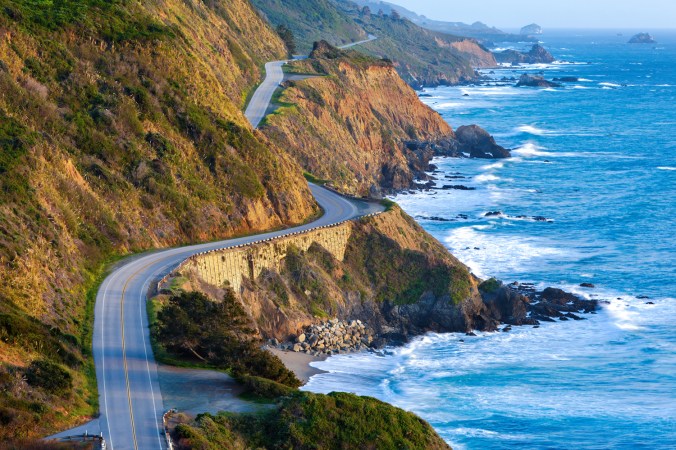
I happened to be on few fragments of these great authors’ roads while travelling America, as many other travellers did, I suppose. I drove on route 66 and the Pacific Coast Highway, for instance; with a sort of reverence. I know more of these roads on the page though. I loved the deep South of the Fitzgeralds and the crazy roads hitten by the lisergic bus crew of The Electric Kool-Aid Acid Test: Ken Kesey, the Merry Pranksters, speedy Cassady and the author Tom Wolfe. The interstate highways travelled by Joe Sullivan and the chain motels where he slept in Cross Country form a sort of Wasted Land for me. I know less of Bill Bryson’s The Lost Continent and A Walk Across America by Peter Jenkins, but the idea of a long social-geographical stroll is striking. The kind of Easy Rider in slow motion. I read and loved On the Road when I was 17. Later I discovered the diaries the book came from. At 18 in a small town in Illinois I met a man who told me he was a train jumper in his youth and I remembered him while reading the account by Ted Conover Rolling Nowhere: Riding the rails with America’s Hoboes. A detailed journalistic account – romance in cold blood.
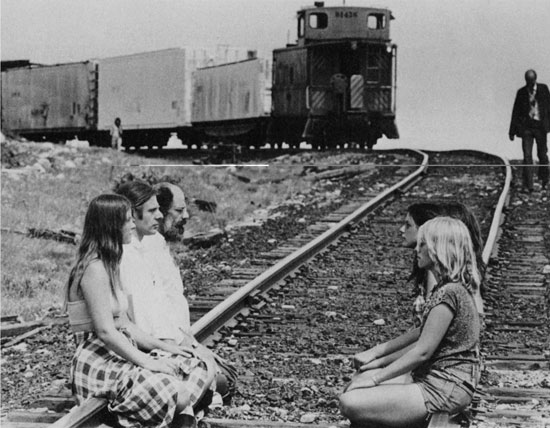
Scrittori beat sui binari/Beats on tracks
The Kreitner-Melendez map is addicting for travel addicts since any clic on a road trip reveals a quotation from one of the selected books. Sometimes travel writers mix up, in the same places. Kerouac and Steinbeck, near Amarillo, Texas (The Lone Star state is a “state of mind” for the Tortilla Flat author). The Crater Lake in Oregon sheds different lights (and insights) in the prose of Robert Pirsig, Cheryl Strayed and William Least-Heat Moon.
In a long sentence by the latter, quoted on the map, I found the sense of the word wanderlust, the sensous pleasure of wandering. It is near Oceanside, New York: “I buckled the seatbelt, popped in a piece of bubblegum, put on my twelve-o’-clock sunglasses, and got ready for the city. You’d have thought I was going to run the Gaza Strip. But it was Islip, Babylon, Amytiville, Merrick, Oceanside”. Wanderlust is a trajectory of names and places ending on the word Ocean.

 Ways of Escape