Jardines de La Reina, Cuba
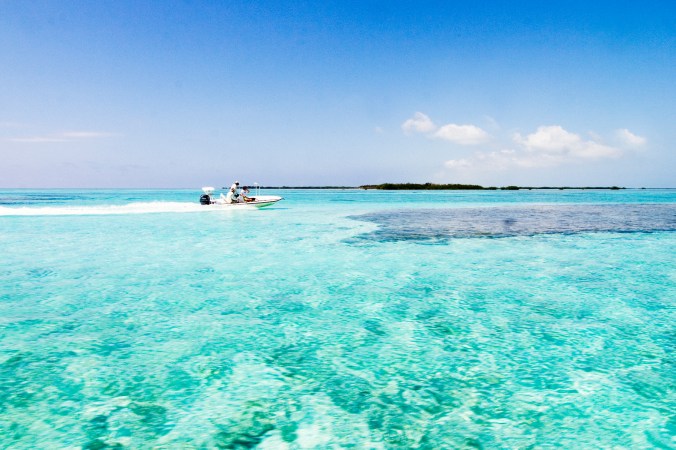
 Nel giardino della regina ho nuotato con i calamari. È una frase che sembra più adatta a un componimento surrealista che a una storia di viaggio. Nelle carte nautiche dei Caraibi è segnato un arcipelago lungo la costa meridionale dell’isola di Cuba che si chiama proprio così: “Los Jardines de la Reina”. Il nome glielo diede Cristoforo Colombo, in onore di Isabella di Castiglia. È un mondo di visioni d’acqua, discosto dalle rotte maggiori dei charter, in uno dei tratti di mare più incontaminati delle gloriose Antille. Un giardino che fiorisce in profondità.
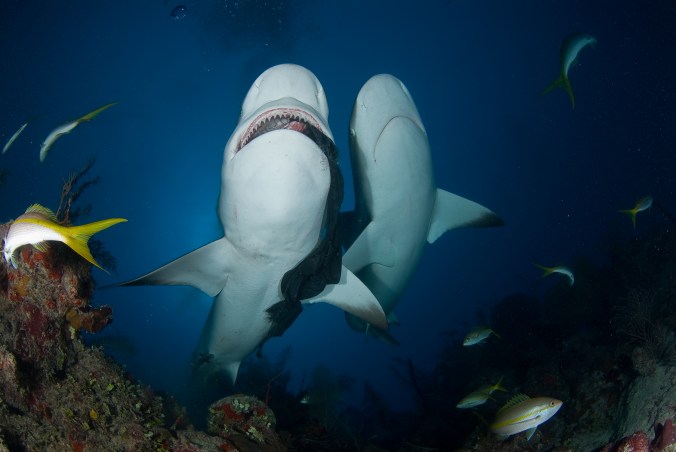
A Cayo Blanco, la mia prima tappa nell’arcipelago, ho seguito una formazione di calamari che, non ci avevo mai fatto caso, nuotano all’indietro! Nell’acqua, così leggera che sembrava aria, davano l’impressione di guardarti negli occhi. I calamari sono tra i più piccoli compagni di bagno nelle isole della Regina. I pesi massimi sono gli squali balena, magnifici e inoffensivi filtratori d’acqua, dal dorso punteggiato. Poi ci sono squali martello, tigre, del reef, sericei, squali limone, tutti un po’ più inquietanti. Ma gli attacchi all’uomo sono rari. Nel parco marino dell’arcipelago si concentra forse la maggior varietà di squali dei Caraibi. Ospitati nel tratto più florido della terza barriera corallina al mondo. Gli squali contendono le prede alle cernie Golia, che arrivano a pesare fino a 300 chili e sfidano senza paura i pescecani. Nei fondali bassi degli isolotti di mangrovie si tuffano anche grossi coccodrilli americani. Lo scenario mi ha ricordato il mondo fantastico e primitivo dello “Zio acquatico”, un racconto sull’evoluzione di Italo Calvino. Un mondo d’acqua, dove la terraferma è una tentazione incerta e lontana. Non a caso, l’arcipelago, più di 600 isole e isolotti sparsi lungo 150 km, è stato ribattezzato le “Galapagos dei Caraibi”. Spiagge appartate, iguane furtive, fregate sospese nel cielo. Fondali dai colori profondi, che non stordiscono come sotto altre superfici marine, ma hanno la caratteristica di assorbire lo sguardo. Con pesci tropicali che sgusciano tra spugne e relitti di galeoni consunti.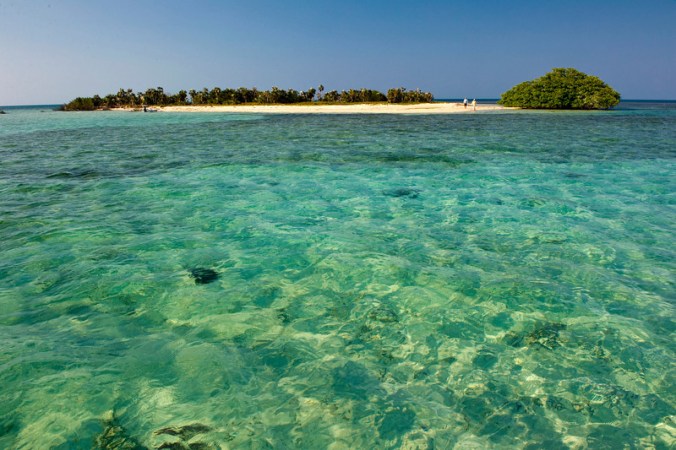
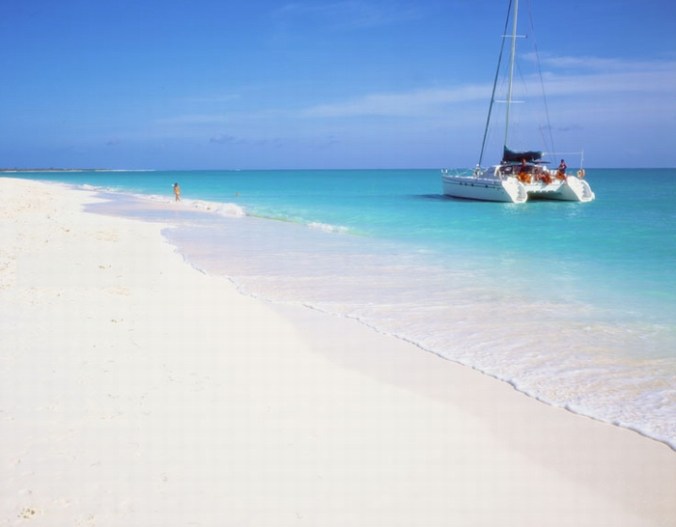
A me è capitato di attraversare il parco in un catamarano a vela, partendo da playa Ancon, la spiaggia di Trinidad. Cayo Pingues, Caguamas, Anclitas, il “labirinto” de Las Doce Leguas, nomi che tornano come maree. E gli stessi cayos sembrano rollare sotto i piedi come scialuppe. Il modo più semplice per accedere oggi al parco, dove veniva a pescare Fidel Castro, è dal piccolo porto di Jucaro, vicino Ciego de Avila. Le immersioni sono a numero chiuso: solo poche centinaia di sub all’anno possono esplorare i giardini subacquei. Una equipe di italiani, Avalon fishing and Diving, organizza battute di pesca sportiva e attività di scuba nel parco sotto il mare. Di notte, si dorme in un motel galleggiante, dal nome corsaro: “La Tortuga”. Il sonno giusto in un mondo acquatico. La terraferma è una tentazione lontana.
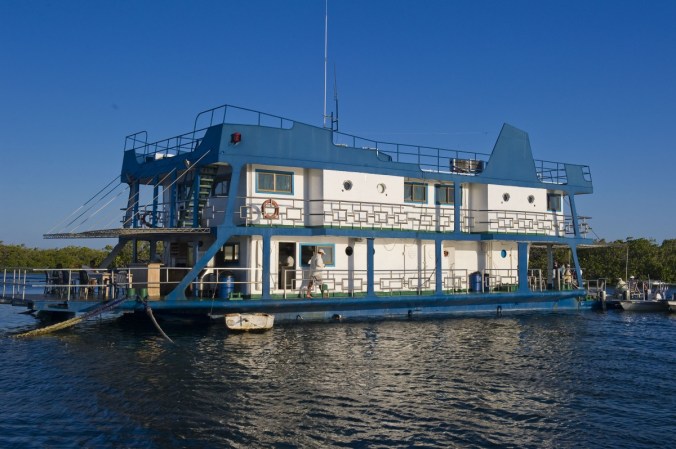
La Tortuga, hotel galleggiante /The floating Hotel “La Tortuga”
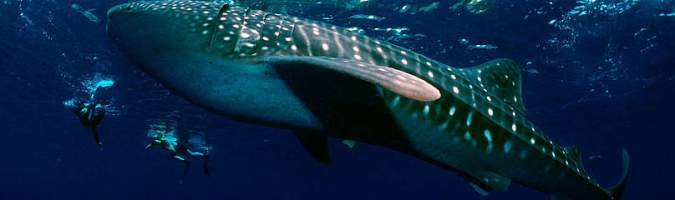
Pesi massimi, uno squalo balena/swimming with heavyweights, a Whale shark
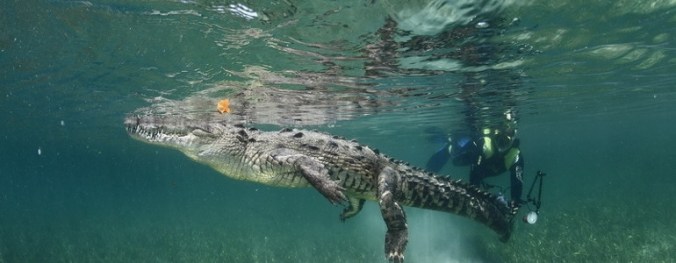
Coccodrillo a pelo d’acqua – Crocodile in shallow waters
LIGHT ARE THE WATERS OF THE QUEEN
I swam with the squids in the Queen’s garden. This kind of sentence may sound more apt in a surrealist poem than in a travel story. But it is a matter of fact that you can find in the Caribbeans nautical charts an archipelago called “Los Jardines de la Reina” – the Queen’s Gardens indeed. It stretches along the southern coast of the island of Cuba. The name was given by admiral Cristoforo Colombo in honour of Isabella of Castilla. Fidel Castro loved fishing here and enjoyed a lobster grilled on a cayo’s beach. It is a vision of water, away from the main routes of the touristic charters, one of the most untouched stretches of sea around the glorious islands of Antilles. The Queen’s gardens flourish underwater.
The squids swam backwards – as the squids use to do – in large formation. The water was so clear and light near Cayo Coco, as we were swimming through the air; and I had the impression to stare in their eyes, my eyes wide open, while crawling above them. And the impression doubled: the squids where staring back at me.
The squids are among the smallest companions you can find, diving in this protected marine park. The heavy weights of the archipelago are the whale sharks, magnificent inoffensive water filtering fishes, the largest sharks in the oceans, distinguished for their typical spotted back. There are other sharks too, maybe the biggest variety in the Caribbeans sea: silk sharks, hammer sharks, tiger sharks, lemon sharks, reef sharks. Babies and grown up ones. All a bit fearsome except the babies. But very few shark attacks to humans have been registered in Queen’s Gardens. The reef is in good health, the third in the world for size, and the sea is bountiful with preys. The sharks hunting is challenged by Goliath Groupers, that can reach 3 meters in lenght and 300 kilos in weight. The sturdy groupers don’t show any fear or respect for sharks and feed themselves with the sharks’ meat sometimes. Big American crocodiles slip in the shallow waters among the mangroves islands to participate at the marine feast. The scenery made me think of “The Aquatic Uncle”, a funny evolutionary tale by Italo Calvino: a fabolous, primitive world. A real waterworld, where mainland is a far, uncertain temptation. Not by chance, this archipelago has been nicknamed as the “Galapagos of the Caribbeans”. Inside the labyrinth of more than 600 islands and islets, scattered along 150 km of sea, you find yourself in a planet before the continents. There are white flashes of fine sandy beaches in the greenery of the mangroves, inhabited by iguanas. There are giant frigates floating in the sky. There are enchanting seabeds with rich coral texture, but the colours do not daze and amaze like in other reefs. Even when tropical fishes swish out from large sponges and galleons relics. Everything is deep and quiet as the show arrives in slow motion and the marine beauty absorbes the eyes of the viewer.
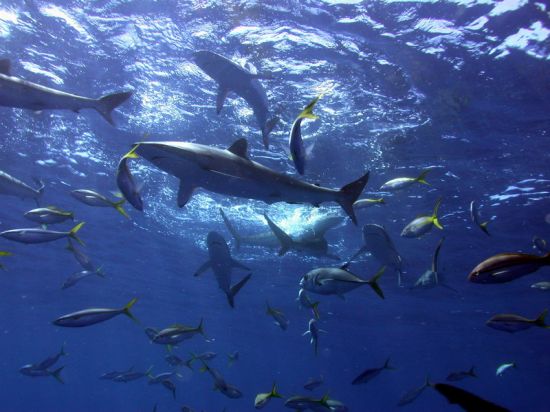
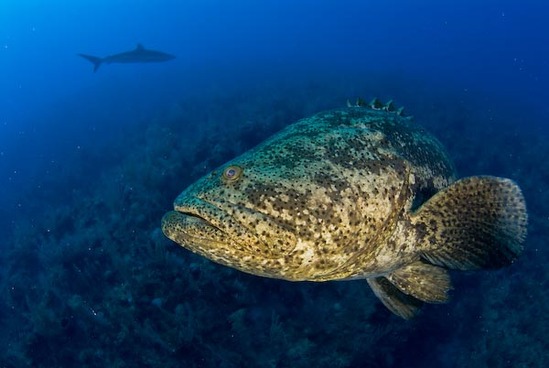
Una cernia gigante/A giant grouper
I sailed off to the Jardines de La Reina in a catamaran, from Playa Ancon, the beach town near the beautiful colonial city of Trinidad. Cayo Pingues, Cagamas, Anclitas, the “labyrinth” of Las Doce Leguas, these names come back to me in tides. The cayos themselves seemed to roll under my feet like small launches. The simplest way to access the park today is from Jucaro, a sleepy harbor, close to Ciego de Avila. The access to divers is limited too. Only few hundreds each year are granted the permit to explore the submarine gardens. A good way to get into the Queen’s archipelago is through Avalon fishing and diving, an Italian equipe which owns several boats and a floating hotel with a sounding name: La Tortuga. The perfect sleep in a water world. The temptation for mainland is vague and distant.
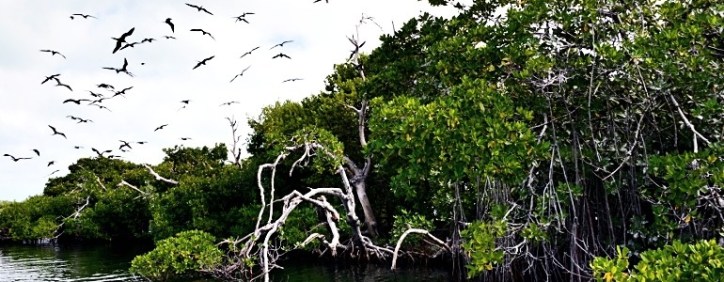
mangrovie dei cayos/mangroves in the cayos
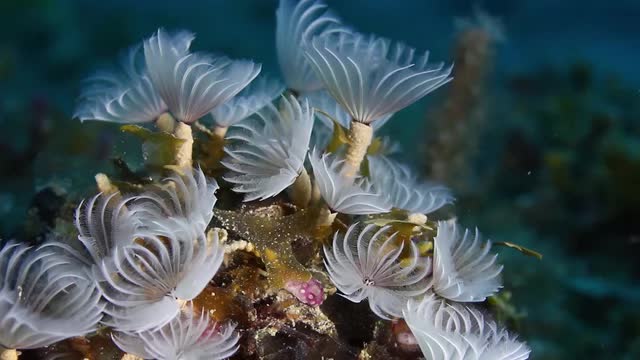
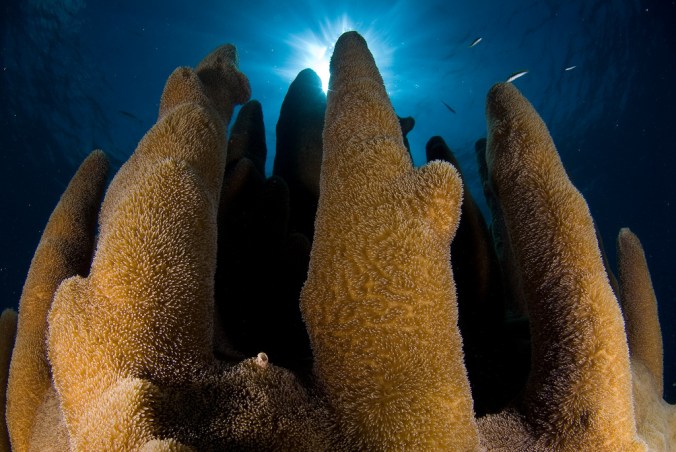
Fioritura sott’acqua/Underwater blooming
 Ways of Escape