Richard Long – Roma, Italia
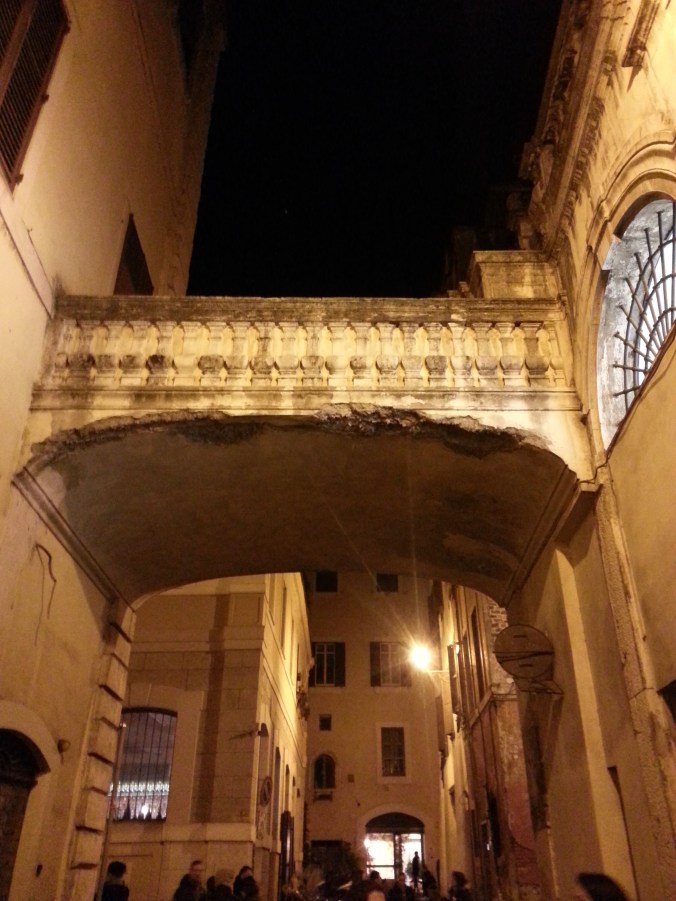
 Roma ha delicatezze segrete nella sua pianta urbana. Un esempio? Se vi trovate nel piccolo labirinto di vie alle spalle di piazza Cairoli, nel rione Regola del centro storico, cercate il vicolo dei Catinari. La stradina divide il secentesco palazzo Santacroce: i due fabbricati sono collegati da un arco, dove ti aspetteresti di veder sfilare uno spettro in equilibrio, a tarda notte.
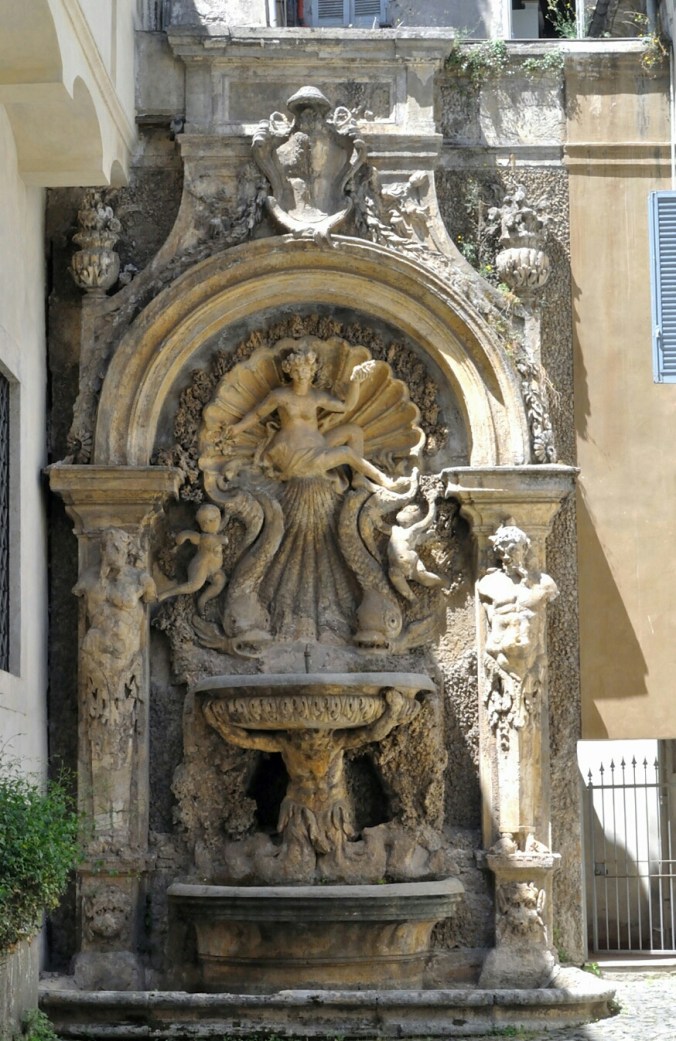
Al civico 3 si apre un ampio cortile, quasi una quinta teatrale. Sul fondale domina una fontana, come una sorpresa barocca: una scultura di Venere sembra levitare sopra un calice, appoggiata a una conchiglia e sorretta da putti e delfini. Nelle vecchie stalle ha sede una galleria d’arte contemporanea, Lorcan O’ Neill, dagli spazi bianchi e rigorosi. Dalla strada al cortile e alla galleria è come attraversare piccoli mondi diversi. Un viaggio in pochi metri. E una tappa di quiete, per un viaggiatore, appartata dal caos capitolino.
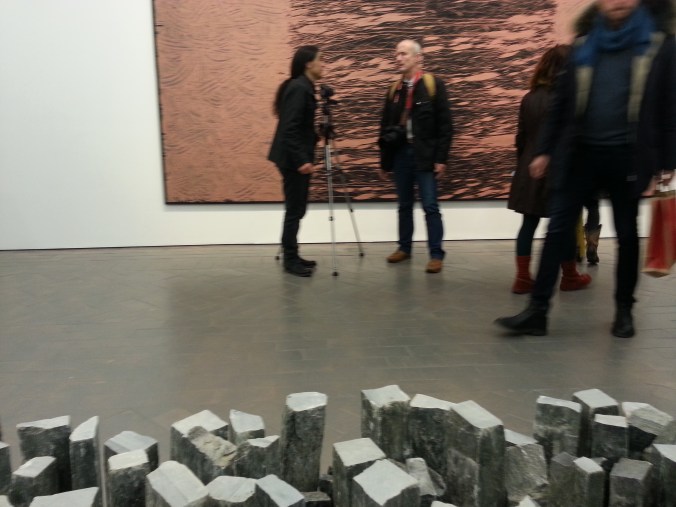
L’ultima mostra che ho visitato qui – ironia dei vicoli e delle strade – è opera di un artista viaggiatore: Richard Long. Ha portato nella galleria un sentiero di pietra. O meglio, assomiglia al letto di sassi di un fiume. E tele dipinte con il fango, che davvero viene da un fiume. È il suo fango preferito, quello lasciato dalle maree dell’Avon nel porto di Bristol, dove è nato. “È incredibilmente forte e vischioso, il prodotto della forza di gravità esercitata dalla luna per milioni di anni” dice. Long, uno dei più importanti land artists al mondo, è anche uno dei più leggeri. È nato proprio a Bristol, 70 anni fa: il fango del fiume Avon è l’impasto della sua giovinezza. “Ha le stesse qualità dei pigmenti nelle pitture delle caverne”.
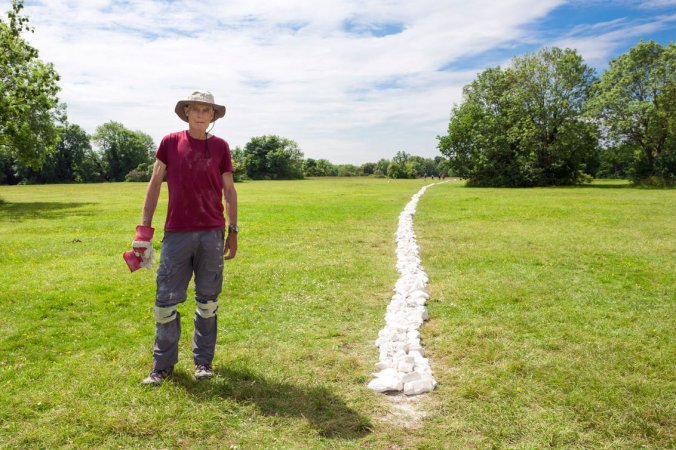
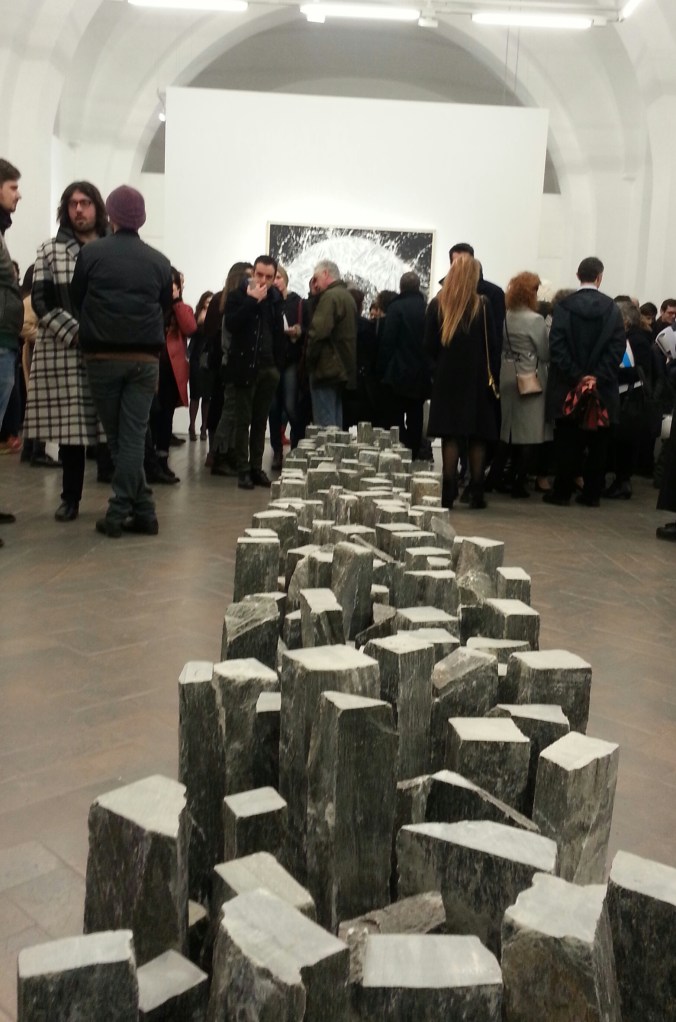
Sopra: l’artista Richard Long. Sotto: la sua installazione di pietre nella galleria Lorcan O’ Neill a Roma/ Above: land artist Richard Long. Below: site specific stones at Lorcan O’Neill gallery in Rome
Da Bristol, Long ha camminato per il mondo. Nel Sahara, in Mongolia, nel deserto del Gobi, in Australia, per migliaia di chilometri. Registra i suoi interventi con mappe, fotografie, disegni. È innamorato dei nomadi africani e dei poeti vagabondi giapponesi, dei bambini e dei costruttori di megaliti. I suoi interventi sul paesaggio sono studiati per essere riassorbiti in un tempo breve. Un “artista della terra”. Le sue opere, le sue composizioni di pietra sono più vicine ai chorten buddisti che all’arte super-protagonista, su vasta scala, di altri land artist di oggi. La sua è una poetica dell’impermanenza. “Mi tengo in forma camminando, mi riposo quando fermo lo sguardo” mi ha detto una volta lungo un’altra strada romana. La galleria sul cortile ora ha un fiume dentro; e le vie di Long si aprono sul mondo, dal cortile con la fontana di Venere. La sua prima camminata in forma d’arte è stata a pochi passi da casa sua, nel 1967, una linea dritta in un prato che veniva risucchiata nell’erba senza finire apparentemente da nessuna parte. Apparentemente.
(La mostra di Richard Long alla galleria Lorcan O’Neill continua fino al 30 aprile)
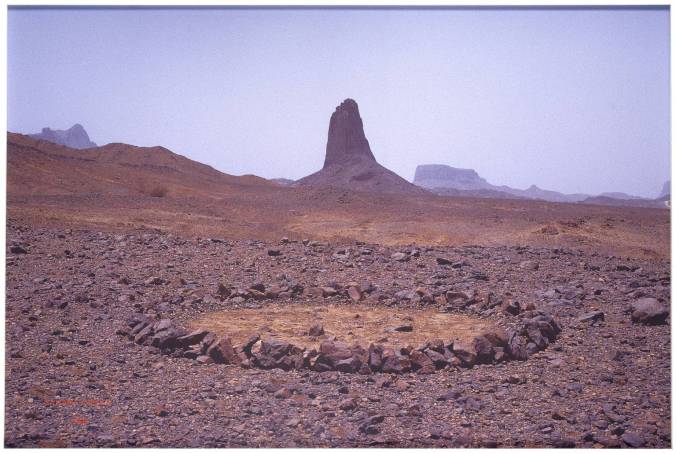
Sahara Circle 1988 Richard Long. Presented by the artist (Building the Tate Collection)
A RIVER IN THE COURTYARD
Rome has secret treats, hidden in its urban map. To find one, you can have a stroll in the maze of little streets behind piazza Benedetto Cairoli, in Rione Regola, in the middle of the historical center. Maybe the tiniest of them is vicolo dei Catinari, an alley that cuts into Palazzo Santacroce. The XVII century palace is composed of two buildings connected by an archway, a sort of balcony suspended over the vicolo, on which you could expect to see a translucent ghost swiftly parading at late night.
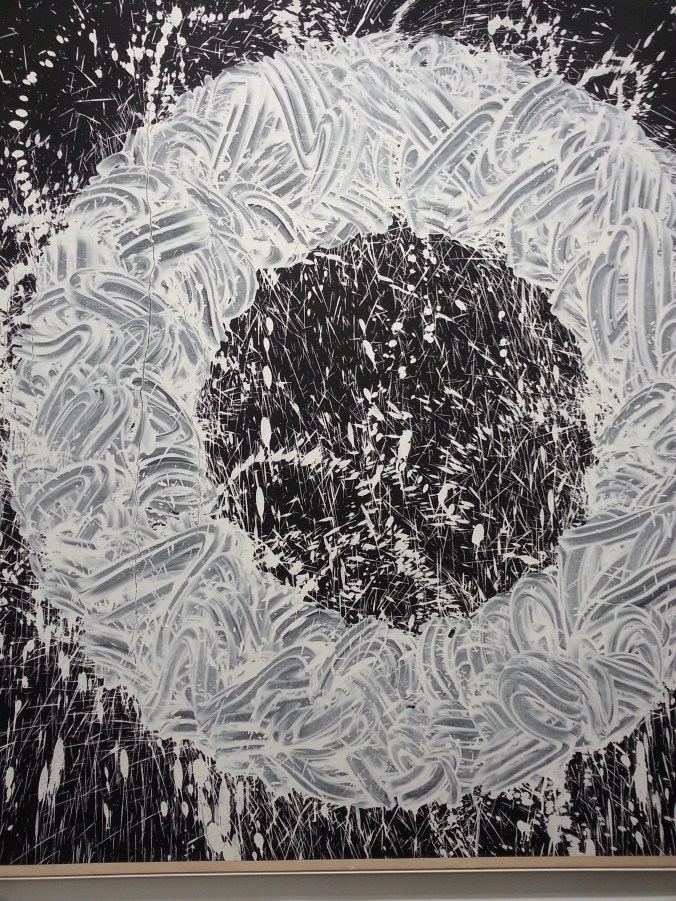
Un mud painting di Richard Long/Richard Long Mud Painting
Going through the ancient doorway at house number 3, you get into a large courtyard resembling a theater scene, with a baroque fountain as a backdrop: a sculpted Venus, encircled by a marine shell, seems levitating over a marble cup, supported by dolphins and puttos. Lorcan O’ Neill, a contemporary art gallery, has its entrance just beside the fountain, its white minimal spaces cause a mental shift for the visitor. From the street to the courtyard to the gallery, it is like moving through different worlds; a journey in few steps. Also a quiet stop-over for the traveller, since this urban capsule is detached from the chaos of Rome.
The last exhibition I visited here – irony of walks and streets – was by an artist who is a great traveller too, Richard Long. He brought inside the gallery a path of stones. Or better, they could be the stones of a river bed. There are mud paintings too, and the mud is still from a river. It’s the artist’s favourite: the tidal mud from the river Avon, in his native Bristol. “It is incredibly strong and viscous, the result of the moon gravity for a million years” he says. Long, 70, is a Turner prize winner and a Land artist, one of the most acclaimed – and one of the lightest of the group. The river Avon’s mud is the color of dough of his youth. “It has the same qualities of the pigments in the cave paintings” he states.
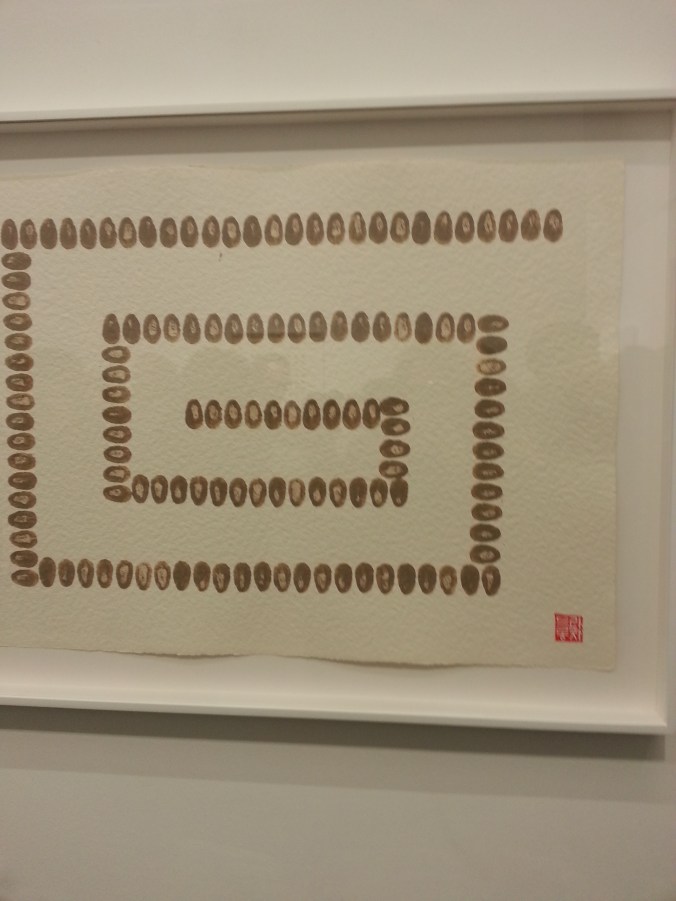
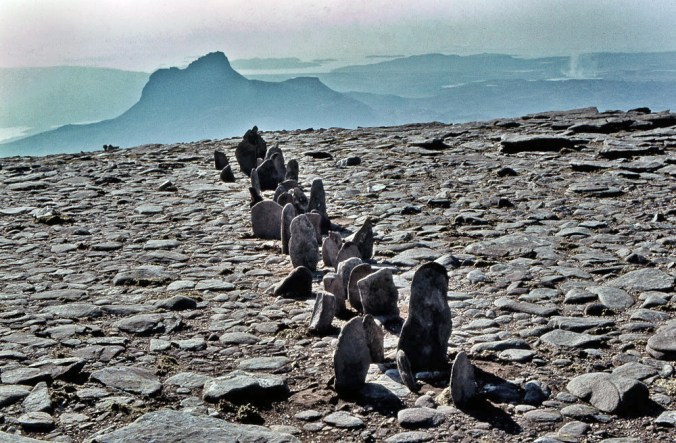
Una linea di Long nelle Highlands scozzesi/A Richard Long stone line in the Scottish Highlands
From Bristol, Long has walked almost everywhere. In the Sahara desert and in the Gobi, in the Scottish highlands and in the Australian outback, miles and miles in his feet’s memories. Walking is part of his art process. He registers his itineraries and interventions in maps, drawings and photographs. Long’s art walks are inspired by his love for the Japanese wandering poets and for the African nomads. In his pictures you can notice a tenderness for children as well as a nostalgia for the vanished megaliths builders. His interventions on the landscape are not invasive, being thought to be reabsorbed in a relatively short time. The stone compositions he makes are rythmic, his mounds recall the Tibetan chorten. An art of impermanence. “While walking I keep my mind in shape, my rest is where and when my eyes stop” Long told me once, when we were talking in another Roman street years ago. His poetic is unchanged. Maybe he sharpened his vision. The gallery in the courtyard now has a river inside. Long’s paths open onto the world from the Venus fountain. His first art walk began in a lawn not far from his home, a straight line disappearing in the grass; apparently going nowhere. Apparently.
(Richard Long exhibition is on view at Lorcan O’Neill gallery in Rome till April 30)
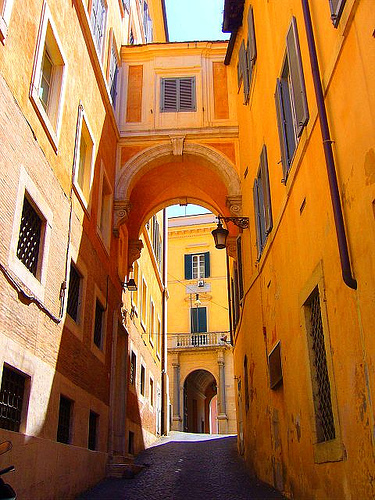
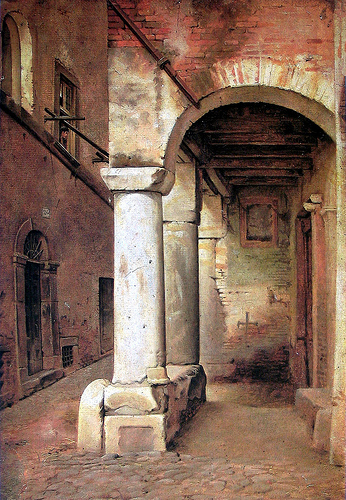
Vicoli romani/Roman alleys
 Ways of Escape