Kutch, Gujarat, India
 (SECONDA PARTE)
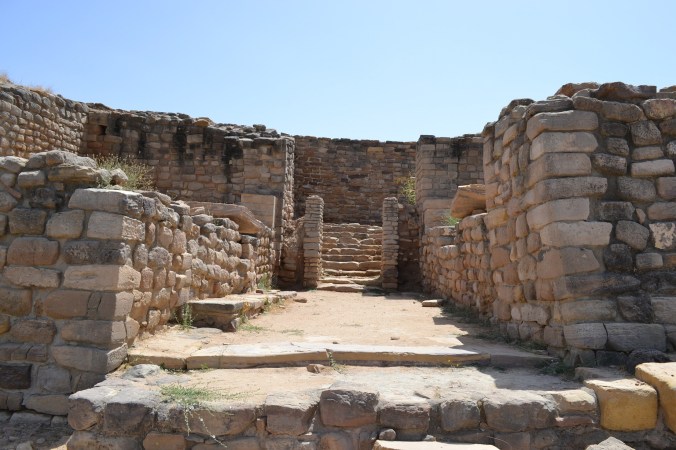
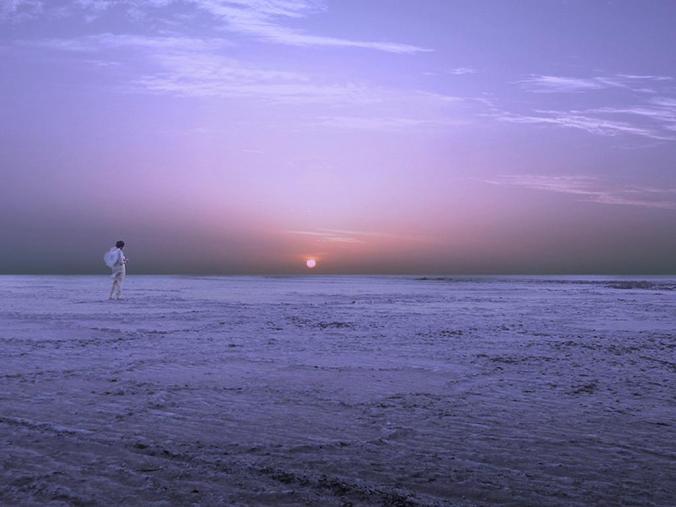
Si trovano, nel Rann, villaggi fortificati come Jhinjhuvada, antica stazione di carovane. Sulle mura di fango sono incisi fregi di foglie che ricordano quelle della cannabis. Addentrandosi nel deserto, piatto e bianco, si risale nel tempo con i resti di città millenarie come Dholavira, accanto al bet di Khadir: è l’unico dei grandi centri della civiltà dell’Indo dalla parte indiana del confine. Tra le rovine, oltre a una perfetta rete idrica e a un colossale serbatoio, sono state ritrovate statuette di 5000 anni fa che raffigurano persone in posizioni simili agli asana dello yoga. Ci sono templi, nel deserto, che potrebbero illustrare le pagine delle Mille e una notte. Fatti di marmi e arenaria traforata di merletti. E tombe, circondate da bandiere. Ne ho visitato una, che, mi dissero, conteneva le ceneri di una donna santa dei Jat, che era diventato un luogo di pellegrinaggio per le tribù del Kutch. Vicino Lilpur, villaggio noto per i ricami, ho incontrato dei sadhu che davano cibo dalle mani a volpi selvatiche dalle zampe bianche. Il fondatore dell’ordine, sostenevano i santoni, le sfamava con piccoli pezzi del suo corpo. Nonostante questo, visse più di cent’anni.
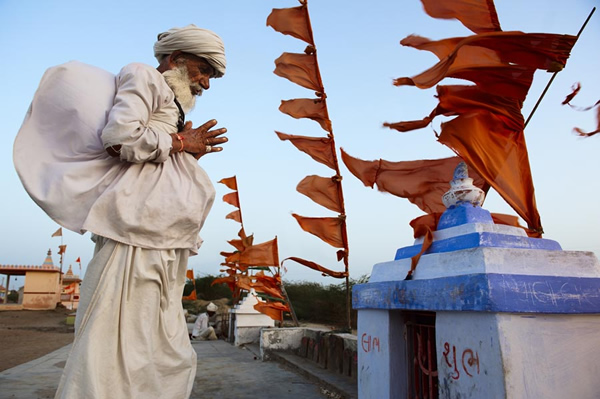
Sadhu in preghiera in una foto di Steve McCurry/Sadhu praying in a Steve McCurry picture
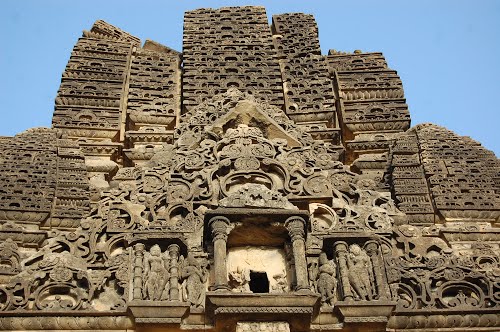
Il tempio di Shiva a Kera, nel Kutch/Shiva temple in Kera, Kutch
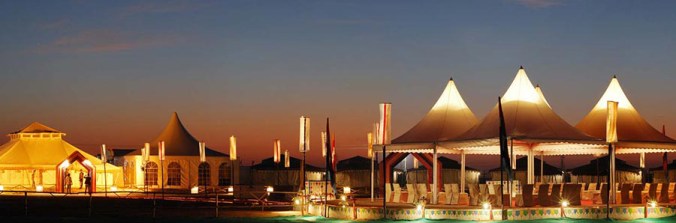
Si fanno incontri strani nel Kutch. Per esempio, una donna in un villaggio che ricamava parole d’amore su una coperta per la figlia, sposata in Australia, che non vedeva da anni. O una coppia di imprenditori di Mumbai molto colti, che incontrai al Camp Zainabad, nel piccolo Rann di Kutch, dove mi ero fermato per alcune giorni. Erano appassionati di gazhoul, i canti indiani di corteggiamento, fioriti alla corte dei Moghul. Il figlio adolescente invece era un tifoso di wrestling americano. I match preferiti li aveva salvati sul cellulare. I genitori non riuscivano a capacitarsene. Al Camp Zainabad, vicino a un lago, arrivò una sera, a bordo di una specie di limousine color crema con autista, una vecchissima signora inglese che pareva uscita dall’epoca del Raj. Non fecero neppure in tempo ad aprirle portiera dell’auto, che l’anziana donna ordinò un gin tonic molto secco, mentre si sentiva il muezzin che chiamava i fedeli alla preghiera. Nella reception, un avviso spiegava che le bevande alcoliche erano bandite. Si riferiva a tutti con l’anacronistico “old chap”, espressione difficile da sentire pure in un villaggio del Kent, oggi. Il personale era perplesso. Fino a quando il proprietario del campo, un giovane che discendeva da una dinastia di nawab locali, aprì il suo bar personale per la vecchia signora. Mi faceva pensare a un personaggio di Agatha Christie. La sera, intorno al fuoco, ci si scambiava storie sul deserto. Il giovane che discendeva dai nawab raccontò con orgoglio del cavallo purosangue che aveva appena comprato. All’alba lo vedevi che faceva esercizi di equitazione. Si dorme, nel campo, in capanne di fango piuttosto confortevoli, con bagni moderni, ben isolate dal caldo del giorno e dal gelo notturno del deserto.
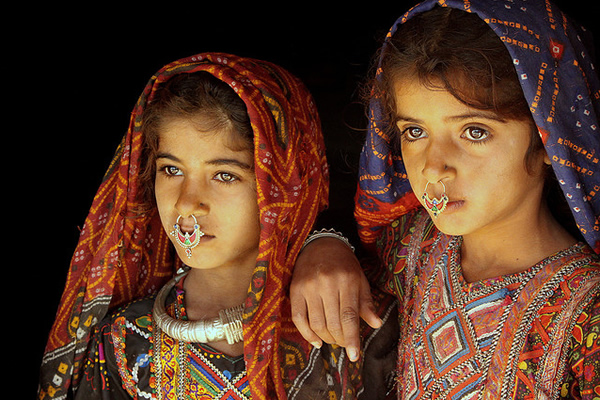
Ragazze Jat in una foto di Retlaw Snellac/Jat girls photographed by Retlaw Snellac
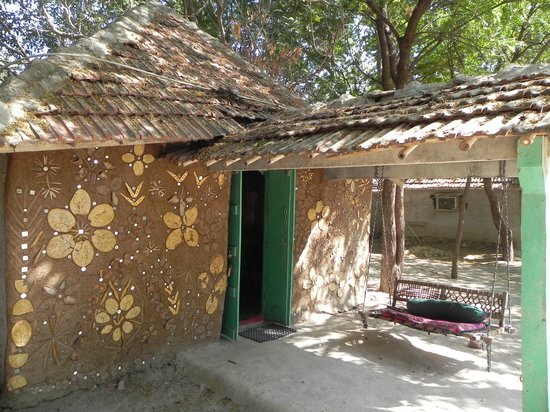
Camp Zainabad
Raramente, ho visto le stelle così vicine nel cielo. Una sera mi sono allontanato dal fuoco, appena fuori dal campo, mentre la vecchia signora inglese illustrava una singolare teoria sulla pillola anticoncezionale e la perdita di virilità maschile. Mi allontanai dai suoni e dal cerchio intorno al falò. Speravo di vedere il fenomeno del Chir Batti, le luci fantasma che nelle notti misteriose del Kutch prendono a danzare e portano i viandanti a perdersi nella buia distesa. Dei testimoni le hanno descritte come fuochi a forma di pera di colore blu, rosso e giallo, che tracciano percorsi irregolari; a volte scivolano nell’aria nera in balli lenti, altre schizzano via più veloci di antilopi con razzi sotto gli zoccoli. Per poi fermarsi a distanza. Non ne è stata data ancora una spiegazione accettabile, anche se è probabile che siano causati dall’accendersi di fosfina, come i fuochi fatui dei cimiteri. Resta il problema della danza. A me piaceva l’idea che le fiamme vagabonde fossero collegate ai vimana, i mitici carri volanti del poema Mahabharata, con i quali si davano battaglia esseri semidivini. Non vidi nessuna luce danzante, però. Solo stelle, costellazioni, che parevano adagiarsi sul dorso notturno della tartaruga. Mi è rimasta la voglia, difficile da sopprimere. E una ragione per tornare.

ON THE TURTLE SHELL (PART TWO)
You may end up, wandering the Rann, in a fortified village coming out from a time capsule of a middle age oriental dream: for me it was Jhinjhuvada, where desert caravans used to stop by, for centuries. Its mud wall are carved with signs of leaves, resembling the ones of Cannabis Indica. If you go into the white flat expanse, time goes backward till the dawn of history. It is the case of the ruins of Dholavira, near the Khadir bet: the only center of the Hindu Valley civilization that stays in the Indian part of the border. The other big ones, like Harappa and Moenjo Dharo, are in Pakistan. So for Indian authorities is a source of proudness. Dholavira is also special for its perfect water supply system, including a giant reservoir; and for few clay statuettes dating back to 3000 B. C. E., whose postures recalls those of some yoga asanas. A beautiful link for both archaelogists and hindu nationalist.
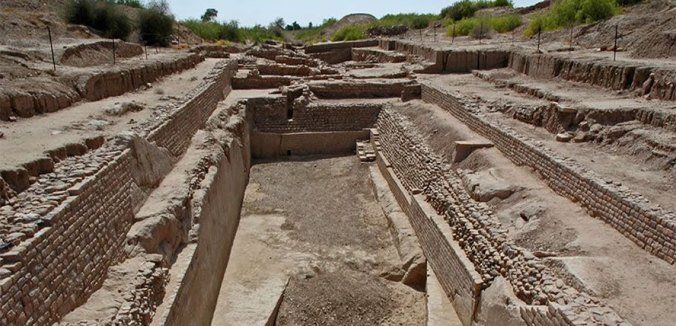
Il serbatoio gigante a Dholavira/Water resrvoir in Dholavira
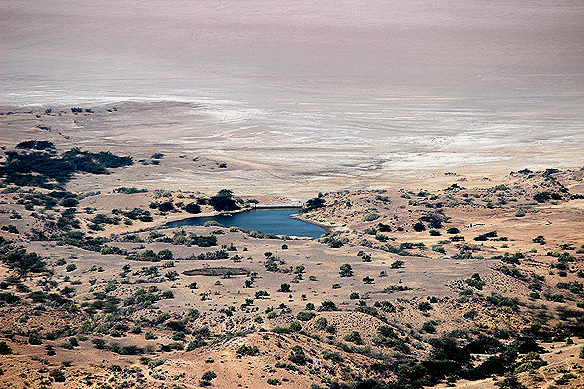
Vista del Rann dal Kalo Dunger/View of the Rann from Kalo Dunger
There are temples, in this desert, that could well figure in a ancient illustrated edition of the Arabian nights: made of marble and sandstones, worked as lace. And there are graves, circled by flags. One I visited, I was told being a tomb of a holy woman of the Jat tribe. It had become a place of pilgrimage for the people of the Kutch. Near Lilpur, reknown for embroideries, I met some sadhu feeding white paws foxes. The tradition comes from the founder of this ascetic order who used to give small parts of his body to the wild animals. Netherless he is known for an unnatural long life.
Strange encounters are being made in the Kutch. It was, in my experience, a village woman who was embroidering love words on a blanket for her faraway daughter, married in Australia. As I understood they were in a cold relation and have not been talking or writing for years – still the mother was embroidering, holding a conversation with her beloved one on a piece of textile. It was then a surprising couple from Mumbai, wealthy bourgeoises, travelling with their young son. I met them at Camp Zainabad, in the Little Rann, where I was relaxing for few days. The couple shared a cultivated interest in the gazhoul, the love songs flourished at the court of Mughals. The boy – about eleven years old – was a passionate supporter of American wrestling. He downloaded his favourite matches on his laptop and spent the evenings rewatching them. For the parents it was beyond comprehension. They didn’t find any elegance or grace in that fake battle of giants. Their boy was mesmerized though.
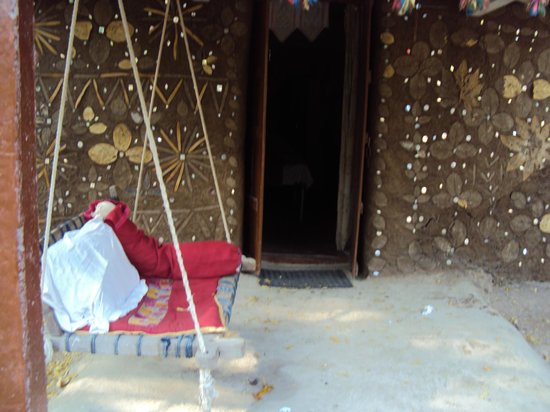
Relax in Camp Zainabad
There were weirder types. The old crank English lady arrived at Camp Zainabad by the evening. The muezzin was calling to prayer from the nearby village, close to a lake, coloured by flamingos. She got out from a caramel beige car, opaque for the dust, followed by the driver who was carring her luggage. Her first act was ordering a very dry gin tonic while filling the form in the reception – just in front of a big written notice about the prohibition of alcohol. She called everybody “old chap”, an expression that you can seldom hear in some village of Kent nowadays. People around were perplexed. She exuded, like in a sepia picture, the faded charme of the Raj. The owner of the camp, a slender short bearded young man, showed a certain flexibility, taking several bottles from his personal bar. He descended from a family of nawabs, local rulers appointed directly by the Mughals with the possibilty to transmit titles and power inside the family. He didn’t keep any legitimate power but inherited from his ancestors a passion for horses. He looked very respected and was really admired when he used to make riding performances on his Arab purebreed, near the camp, every morning. People smiled and bowed, proud of their young boss. The boss could afford to break the rules.
So we sat around the fire with several bottles of old spirits. We took the habit to bonfires and alcohol. We talked about the deserts: the Rann and other deserts we visited or read about. After the fire we went to sleep in our confortable huts, with modern bathroom and rustic furniture. The sleep was legendary.
In one of those bonfire talks, while the old lady was explaining a vague theory that connected the decreasing masculinity in contemporary western males to anticonceptional pill – a theory I am not going to explane you now – I slipped silently away from the circle and went into the bordering wilderness. It was dark but stars were shimmering as I never experienced. Stars were close. My hope was to watch the Chir Batti, the ghost lights that sometimes appear and dance in the mistery nights of the Kutch. They are said to attract the travellers away from their camps in the depth of the desert. Some witnesses described them like pear shaped fires – blue, red and white – moving unconstantly in the darkness. They can twirl slow in the black air, then quickly rush away like antilopes with rockets in the hooves. And stop at distance, waiting, challenging. Nobody gave an acceptable explanation of this phenomenon, even if it is probable that they are generated by the lighting of phosphine, like jacks o’ lantern in the cimiteries. But you still have to explain the dance. I preferred to imagine a relation with Vimanas, the flying charriots of the Mahabharata. In the hindu poem they are used as battleships by almost divine beings. I didn’t see any dancing light that night though. Only stars, constellantions leaning lazily on the back of the turtle. I remained with my overpowering urge. It is also a reason to come back.
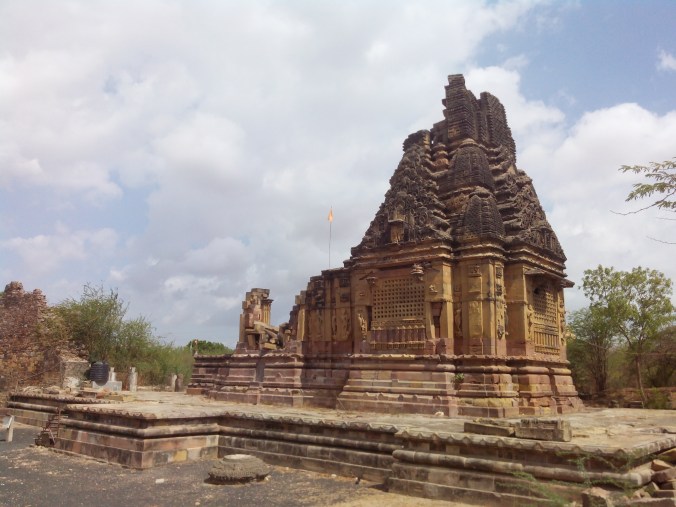
Il tempio di Shiva a Kera/Shiva temple in Kera
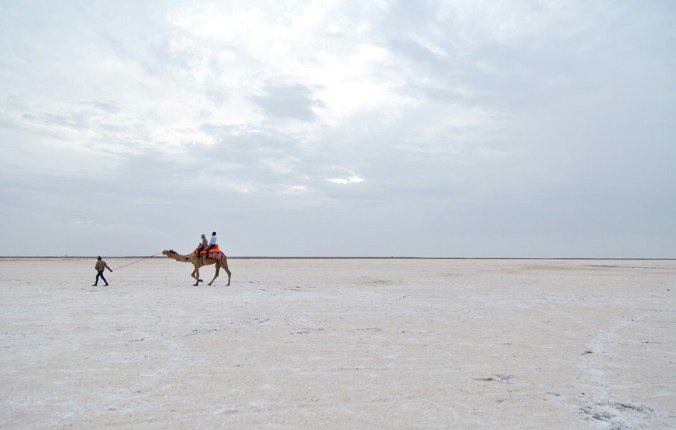
 Ways of Escape