Kutch, Gujarat, India

 Parte prima
Capitano a tutti i desideri insopprimibili. A me è successo su una pista del Rann di Kutch, uno strano deserto che si estende nello stato indiano del Gujarat fino alla foce dell’Indo in Pakistan. Chiesi all’autista della vecchia Maruti di fermarsi, presi una borraccia e un binocolo e cominciai a camminare per un paio di chilometri sulla crosta di fango e sale in vista di alcune oasi, qui chiamate bet, che si stagliano appena sulla superficie rugosa che vibra col calore, all’orizzonte.
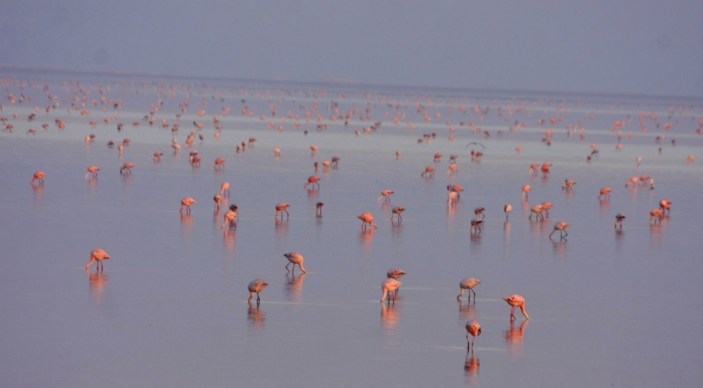
Sotto le mie suole, imbalsamati dal sale, crepitavano migliaia di gamberetti. Uno sconfinato, accecante cimitero marino. Durante la stagione dei monsoni (giugno-settembre), il mar Arabico entra attraverso lo stretto golfo di Kutch, trasformando il deserto in una vasta palude. Le oasi diventano isolotti, dove si annidano fenicotteri e si rifugiano gli asini selvatici. Con la stagione secca (da fine novembre a maggio), l’acqua si ritira lasciando una crosta di sale sopra il fango rappreso. Il piccolo e il grande Kutch, riuniti da un passaggio, formano il più grande deserto salato del mondo. Dalla superficie apparentemente solida. Ogni tanto la crosta, piena di crepe, cede sotto il peso eccessivo dei grandi camion Tata, che si vedono affondare lentamente, come miraggi, nel terreno molle sottostante, tra i crostacei rimasti imprigionati nel sale.

Un Rabari/a Rabari man

Una ragazza del Gujarat in una foto di Steve Mc Curry/Portrait of a Gujarati girl by Steve McCurry
Ogni tanto mi voltavo a controllare il mio fuoristrada. Che non affondasse; o svanisse come un miraggio. I bet erano pieni di cespugli spinosi e di minuscoli uccelli dalle piume color ambra. In uno trovai i resti di un accampamento di nomadi. Chi lo dice che i deserti sono vuoti? Lo sembrano soltanto. Ai margini del Rann di Kutch (il nome si potrebbe tradurre come il “deserto del guscio della tartaruga”) vivono i Rabari, una tribù di tessitori, gli uomini vestiti rigorosamente di bianco, le donne coperte da mantelli viola shocking che lasciano scoperti solo gli occhi. Lo attraversano le carovane coloratissime dei Jat, un popolo nomade, forse giunto dal Sind, e dal quale si pensa che discendano gli zingari. Sono gli unici capaci di attraversare il centro del Rann, dove non si avventurano neppure i khur, l’ultima specie superstite di asini selvatici. Nelle zone periferiche, s’incontrano uomini che succhiano il sale dal deserto con pompe diesel. Per venderlo, a poco prezzo. La loro pelle scurissima contrasta con le mani e i piedi, bianchi fino ai polsi e alle caviglie. Vivono in roulotte, in tende, in case prefabbricate da dove spunta, spesso, una parabola satellitare. Una vita durissima, da dannati del sale. Che non li lascia neppure nella morte. Sulle pire dove vengono cremate le loro salme, le estremità coperte di sale non riescono a bruciare.
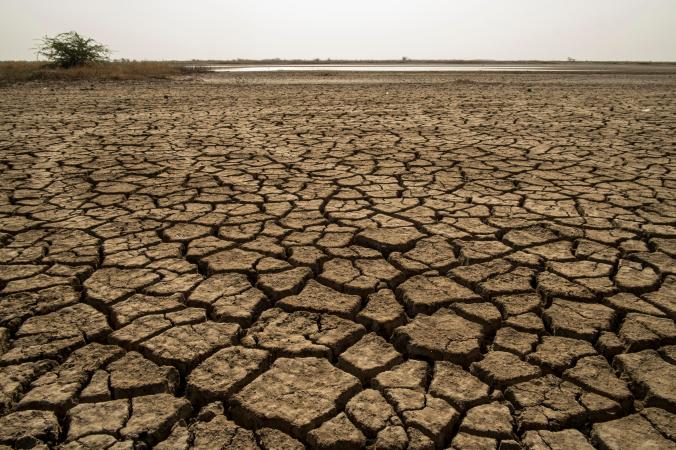
Il dorso della tartaruga/ The Turtle Shell – photo credit: <a href=”http://www.flickr.com/photos/54187340@N04/14296174336″>Cracked earth</a> via <a href=”http://photopin.com”>photopin</a> <a href=”https://creativecommons.org/licenses/by-nc/2.0/”>(license)</a>
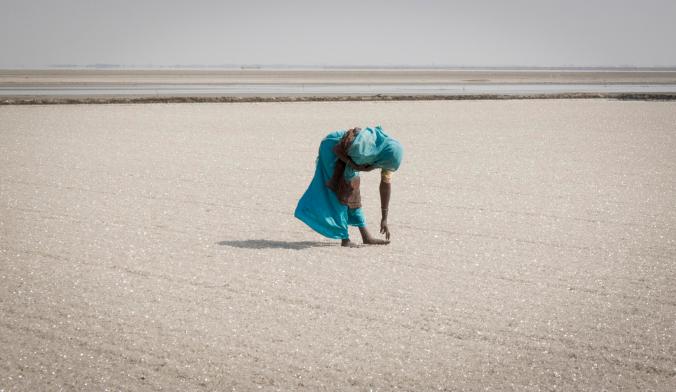
Donna nel deserto di sale/Woman in the White Rann –
photo credit: <a href=”http://www.flickr.com/photos/54187340@N04/14318664684″>Salt worker little rann</a> via <a href=”http://photopin.com”>photopin</a> <a href=”https://creativecommons.org/licenses/by-nc/2.0/”>(license)</a>

Un lavoratore del sale vicino a Dhagandra/Salt worker close to Dhagandra
photo credit: <a href=”http://www.flickr.com/photos/54187340@N04/9653560668″>Sunset over salt desert in Little Rann sanctuary</a> via <a href=”http://photopin.com”>photopin</a> <a href=”https://creativecommons.org/licenses/by-nc/2.0/”>(license)</a>
ON THE TURTLE SHELL
Everybody experience overpowering urges. In my case, it was walking few miles in that middle of nowhere, known as the Rann of Kutch. Well, it’s not really nowhere: it is a strange desert that stretches from the Indian state of Gujarat to the river Hindu’s mouth, beyond the Pakistani border. I asked the driver of my rented Maruti to stop along the track, and, carrying a water bottle and a binocular, I marched on the mud-and-salt crust heading to some oasis, here called bet. They were vibrating with heat just above the horizon line.
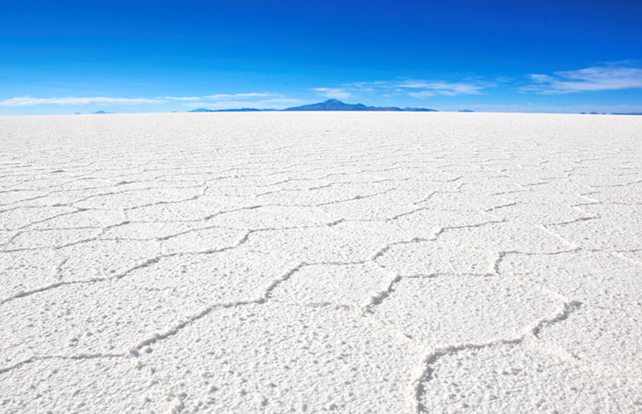
Under my shoes, thousands of shrimps were crackling, embalmed in the salt. A dazzling cimetière marin. During the monsoon season (June-September), the Arabic sea floods the land entering from the narrow gulf of Kutch and changes the desert in large area of swamps and marshes. The oasis become islets, where flamingos and wild asses find refuge. When the dry season comes (from late November to May), water retires, leaving a cracked crust of salt over a layer of soft mud. This weird land, called the Rann of Kutch – “the desert of the turtle shell”, for its cracked corrugated soil – forms the largest salt desert in the world. It is shaped in two different deserts, the Great and Little Rann, connected through a passage. Its nature is cheating: sometimes the thin crust crashes under the heavy Tata trucks and you can see the abandoned vehicles slowly sinking in the mud, like mirages, among the crustaceans left by the sea.
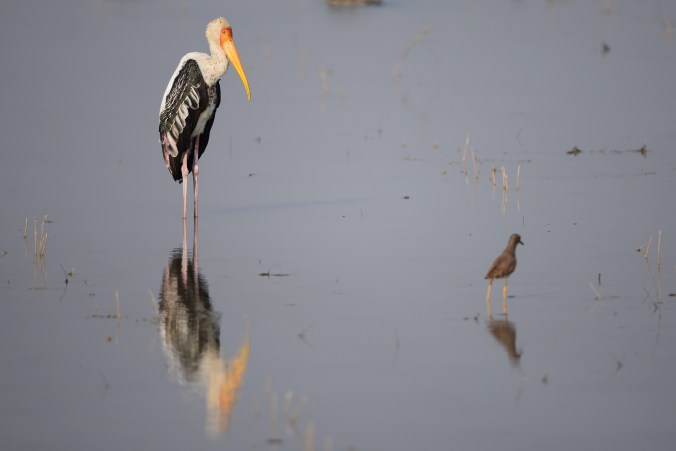
Uccelli nel Rann/ a Painted Stork and white-tailed lapwing –
photo credit: <a href=”http://www.flickr.com/photos/89274239@N00/15627337243″>LRK-Look-at-me-when-Im-talking-to-you</a> via <a href=”http://photopin.com”>photopin</a> <a href=”https://creativecommons.org/licenses/by/2.0/”>(license)</a>
From time to time, I turned backward to check that my jeep was still there, fearing it could fade or sink like a mirage of the Rann. In the bets there were plenty of bushes and thorns. I saw microscopic birds with amber coloured feathers. In one of the desert islets I found the remaings of a nomads camp. Who said that deserts are empty? They just look so. The Rabari people, a weavers tribe, live at the edge of the Rann of Kutch. Men wear rigorously white, in long robes. Women have dresses and head scarves of deep blue and pink and of a shocking violet. Then, there are the colorful caravans of the Jat, a nomadic people: somebody say they come from the Sind; according to a legend that I heard, the gypsies are told to descend from them. They are the only people able to cross safely the heart of the Rann, where not even the khurs, the last surviving species of wild ass, dare to to go.
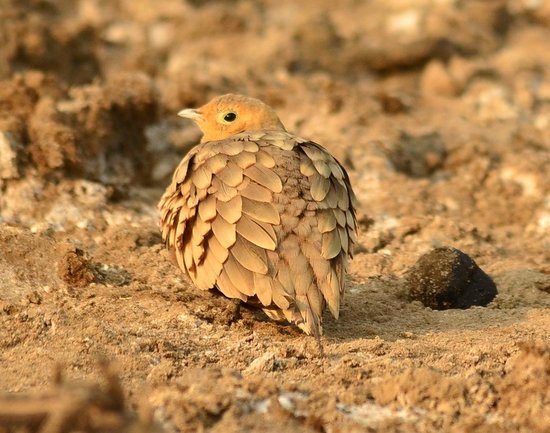
Bird watching in the Rann
Near the peripheral bets you can meet sedentary people instead. Their skin is very dark, but their hands and feet are shining white, because of the salt. It is both their wage and damnation. They suck salt from desert using noisy diesel pumps, while dwelling in tents and shacks. Their camps sometimes have not enough water but you can notice satellite dishes, though they are rarely working. Their salty desperation don’t leave them alone in death either. When their bodies have been set on funeral pires, fire cannot burn hands and feet encrusted of salt. But all of them hope to end their days far away from this beatiful desolation.
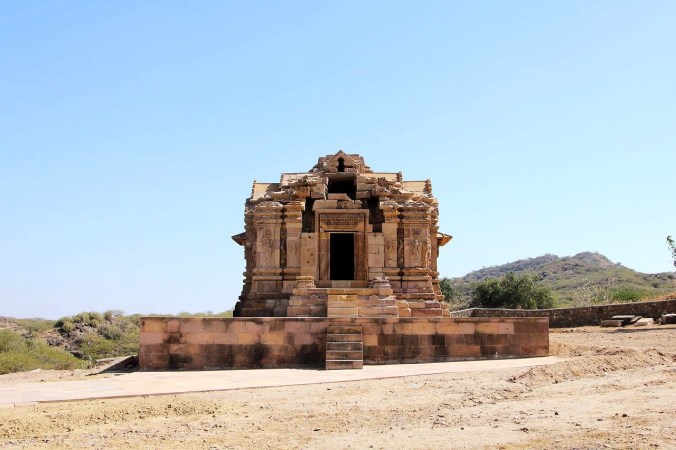
Un tempio medievale hindu nel Rann/Medieval Hindu temple in the Rann –
photo credit: <a href=”http://www.flickr.com/photos/50953149@N00/16525971266″>9th Century Shiv Temple in Kutch, Gujarat</a> via <a href=”http://photopin.com”>photopin</a> <a href=”https://creativecommons.org/licenses/by-nc-sa/2.0/”>(license)</a>
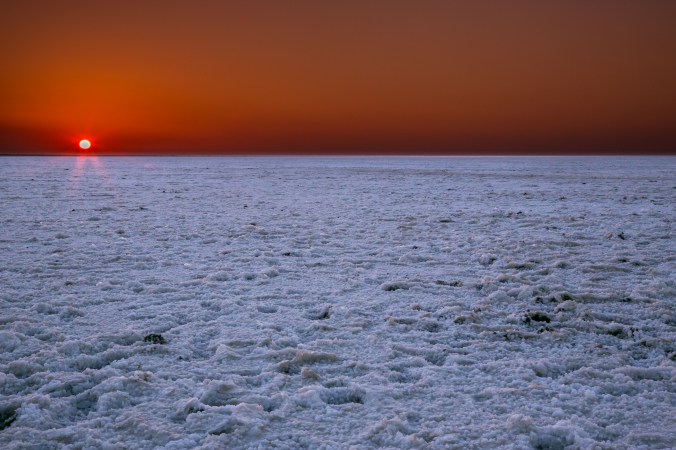
Tramonto sul Rann/Sunset on the White Rann
photo credit: <a href=”http://www.flickr.com/photos/72291318@N00/12541240504″>Sunset at White Rann of Kutch , Gujarat, India</a> via <a href=”http://photopin.com”>photopin</a> <a href=”https://creativecommons.org/licenses/by-nc-nd/2.0/”>(license)</a>
 Ways of Escape